

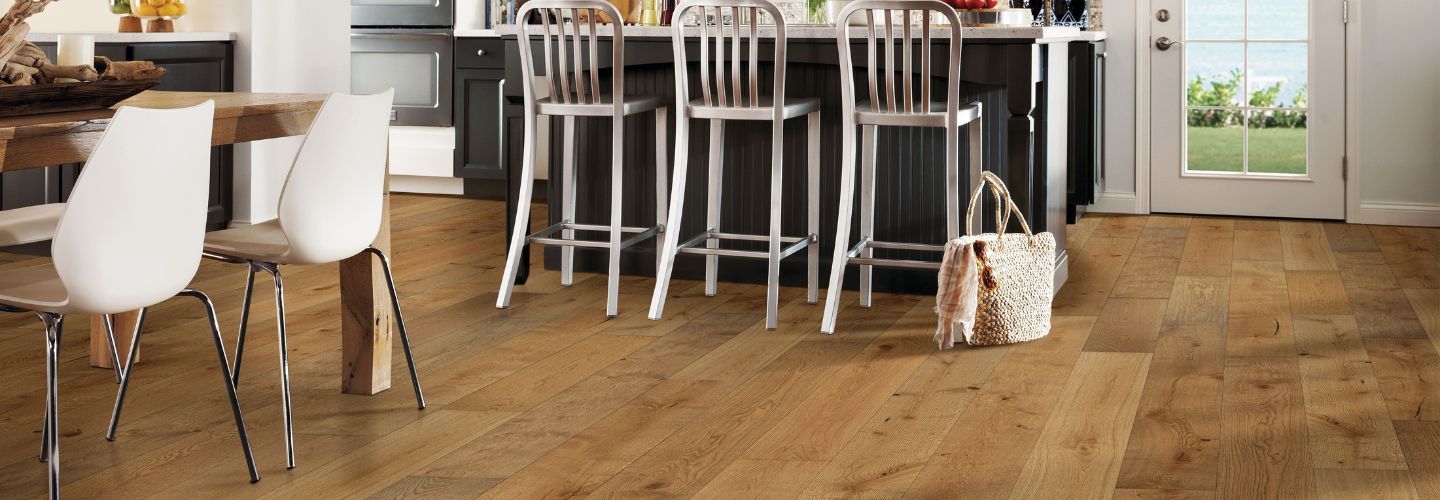
Product & Trends Hardwood Flooring Trends: Choosing the Right Width, Finish, and More for Your Home
Mar 15, 2026Hardwood flooring continues to evolve as homeowners and interior designers look for surfaces that feel natural, timeless, and practical for modern living. Today’s hardwood floors aren’t defined by just one look. Instead, choices around plank width, finish, color, and construction allow wood flooring to suit a wide range of homes—from historic renovations to new builds.
Here are some of the hardwood flooring trends shaping residential interiors right now.
Wider Planks Take the Lead
While many 18th- and early 19th-century homes featured wide boards cut from old-growth timber, narrower 3" to 3½" strip flooring became the norm in houses built in the late 19th and early 20th centuries as the supply of large old-growth timber declined and industrial milling made standardized strip flooring widely available. Beginning in the early 2000s, improvements in milling technology and engineered wood construction made wider planks more stable and widely available again, bringing wide-format wood flooring back into residential design.
Planks in the 5" to 7" range are now a common choice for many homes, offering a balanced scale that works well in living rooms, kitchens, and bedrooms. Larger planks, often reaching 10" to 12" wide or more, reduce seams and showcase more of the wood’s natural grain.
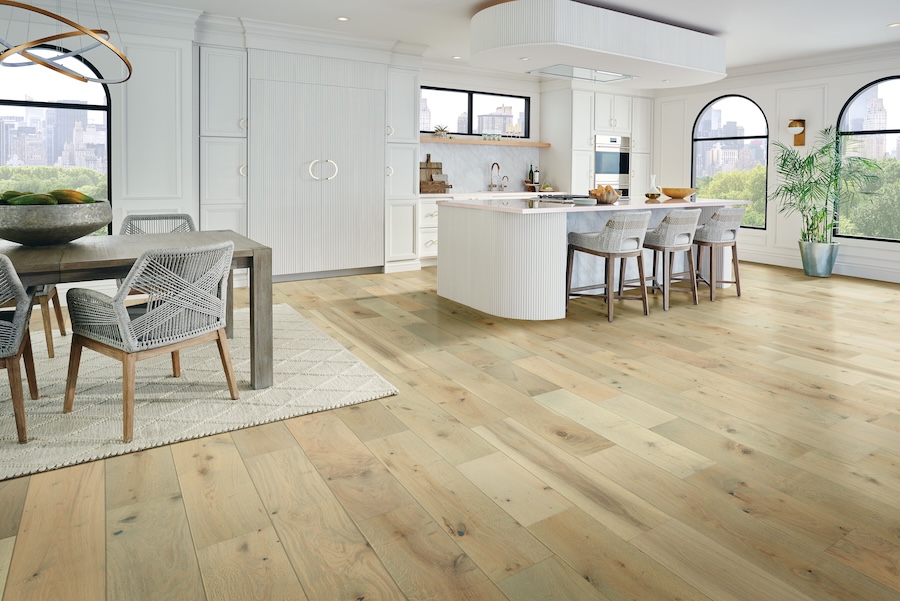 Glenmora™ engineered hardwood flooring is available in widths of 6"-9".
Wider boards can make rooms feel calmer and more expansive. They also highlight the wood's natural character, allowing knots, mineral streaks, and grain patterns to become part of the design while creating fewer visual breaks across the floor.
Low-Gloss Hardwood Floors Are In
In the 1980s, when hardwood floors began making a comeback after decades of wall-to-wall carpeting, high-gloss finishes became the standard for those seeking a luxurious aesthetic. The 1990s to the early 2000s were the peak of the "modern" high-gloss trend. Popular styles included narrow planks with high-shine finishes, often in light blond oak or reddish tones like Brazilian cherry.
High-gloss floors became less popular because they show scratches, dust, and footprints, making them harder to maintain in active households. Low-luster satin or matte finishes are now preferred for their natural look. Aesthetically, modern design has moved toward a more unrefined, organic, or even distressed look rather than the formal, "piano-finish" shine of the past. Low-sheen finishes result in floors that look closer to natural wood while still offering modern durability.
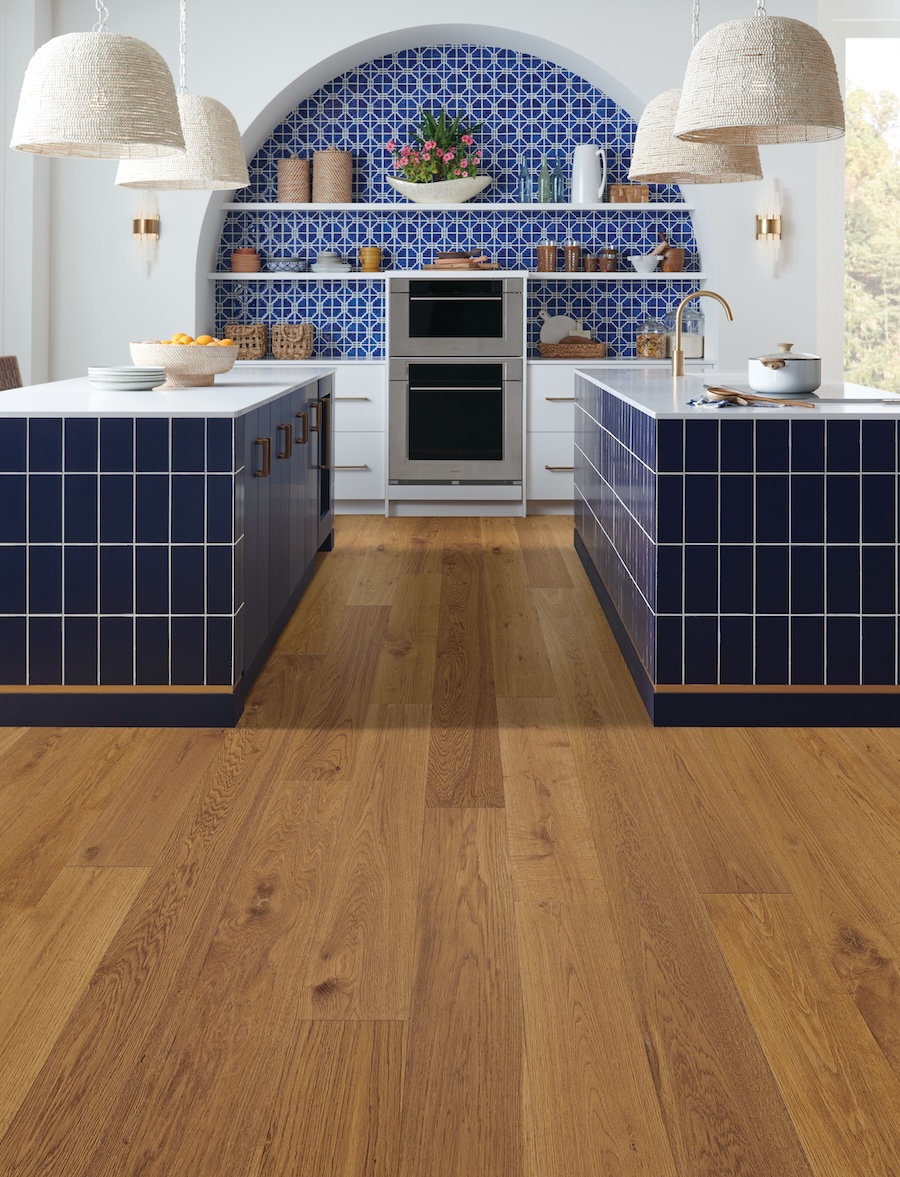 Low-gloss Goodman™ engineered hardwood planks are wire-brushed and 7 1/4" wide.
Textured Hardwood Adds Character
Texture is another design element gaining attention in hardwood flooring. Instead of perfectly smooth surfaces, many homeowners and interior designers are choosing wood floors with textures that add depth and visual interest.
Wire Brushed
Wire-brushed hardwood is one of the most popular options. During the finishing process, a steel wire brush is used to remove the softer fibers within the wood’s grain, leaving the denser grain slightly raised. The result is a floor with visible texture that highlights the wood’s natural character while helping disguise everyday wear.
.jpg?lang=en-US) Bacova™ engineered hardwood planks are wire-brushed and 7" wide.
Bacova™ engineered hardwood planks are wire-brushed and 7" wide.
Hand Scraped
Hand-scraped hardwood offers a more artisanal look. These floors feature subtle variations created during finishing that give each plank a slightly unique appearance. The effect recalls traditional craftsmanship and pairs well with both rustic and transitional interiors.
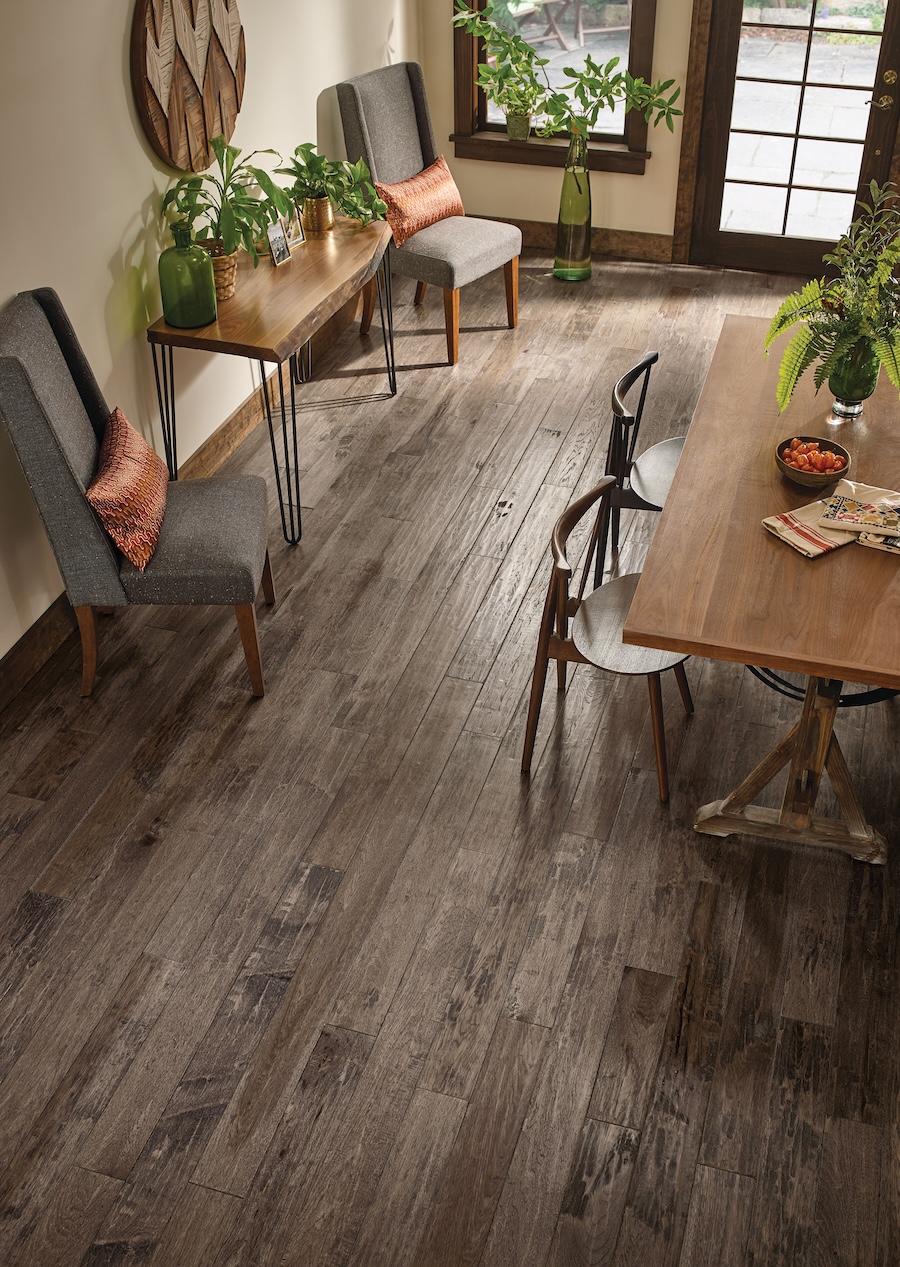 Sawbrier™ solid hardwood planks are hand-scraped and 5" wide. Shown here in a wire-brushed finish.
Textured hardwood floors can also make spaces feel more relaxed and lived-in, complementing the natural materials and organic design styles that are shaping many of today’s homes.
Natural Wood Tones Feel Timeless
Color trends in hardwood flooring are also shifting. For several years, gray-toned and very dark espresso-stained floors dominated residential interiors. Today, many homeowners are moving back toward more natural wood tones that highlight the material's inherent warmth and variation.
Popular choices include natural white oak tones, warm neutrals, and soft mid-tone browns. These shades layer easily with a wide range of cabinetry, furniture, and wall colors, helping interiors feel timeless.
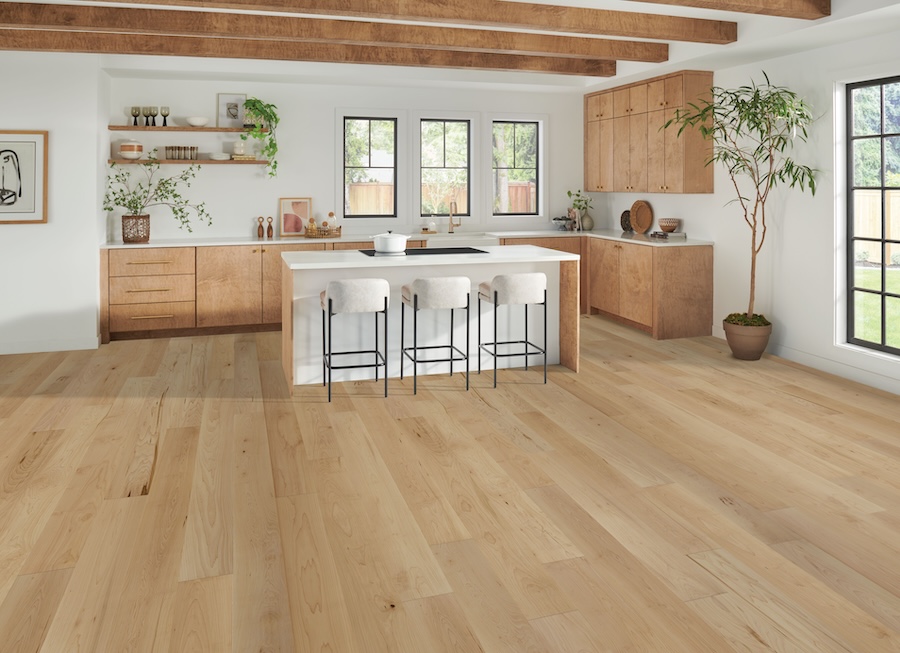
Fortessa™ densified engineered wood planks are available in smooth or wire-brushed finishes and widths of 7 1/2" to 8 1/2".
Hardwood Flows Through More of the Home
Another notable shift is the move toward continuous flooring throughout the home. Instead of switching materials from room to room, many homeowners now prefer to carry hardwood flooring throughout living spaces, kitchens, hallways, and bedrooms. This approach creates visual continuity and helps spaces feel larger and more cohesive.
Engineered hardwood flooring is an excellent way to achieve continuous flooring throughout the home. Its layered construction offers greater moisture resistance than solid hardwood, allowing wood floors to extend into kitchens, powder rooms, and other adjacent spaces where occasional splashes and humidity are part of daily life.
Choosing the Right Hardwood Construction
While style matters, the type of hardwood construction also plays an important role in performance.
Solid hardwood flooring offers a classic, time-tested flooring option that can be refinished multiple times over its lifespan.
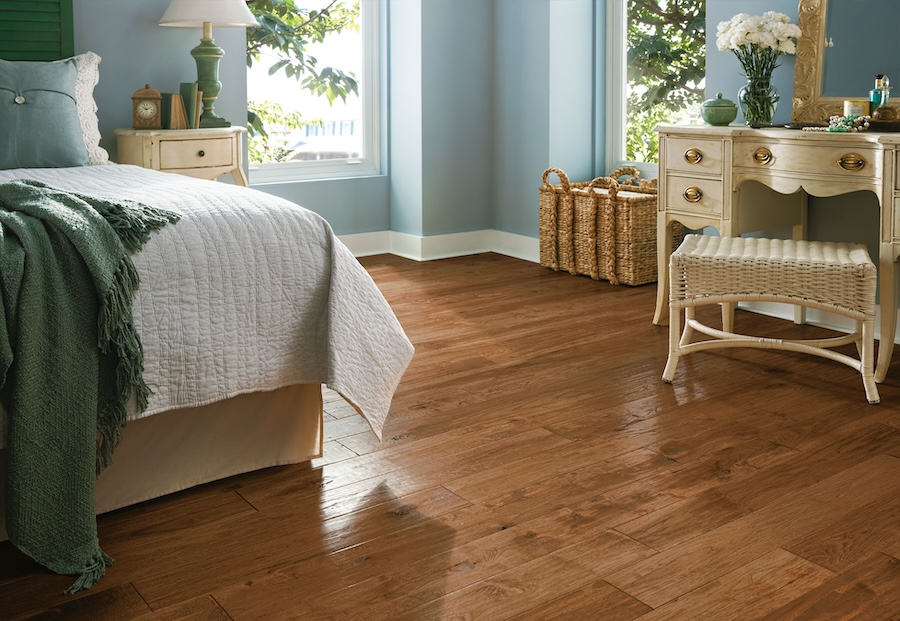 Sawbrier™ solid hardwood
Engineered hardwood planks feature a layered construction designed for greater stability, making it suitable for a variety of installations and subfloor conditions.
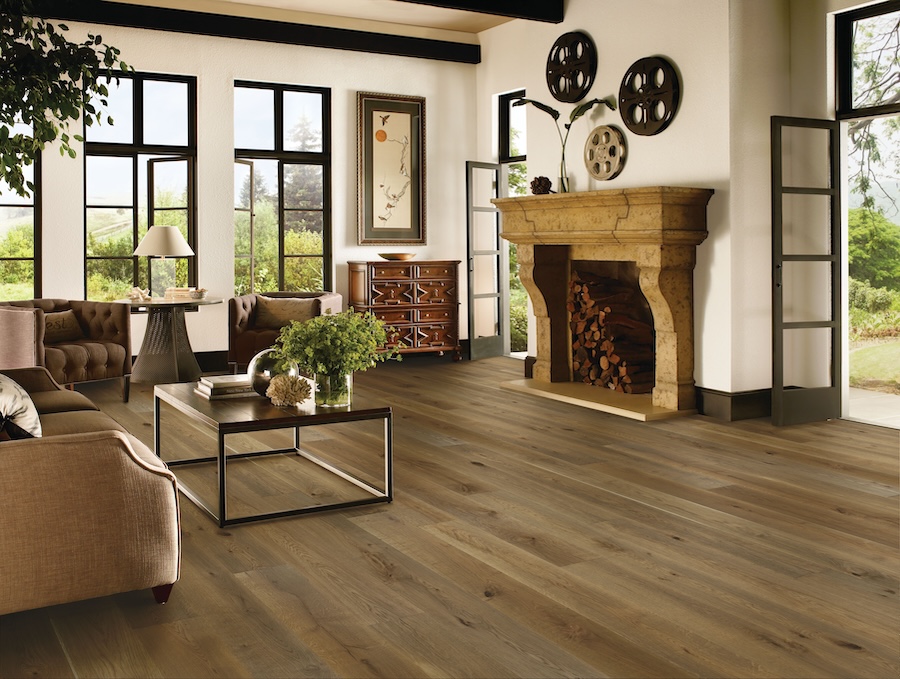 Glenmora engineered wood flooring
Densified hardwood enhances wood's natural hardness through a specialized manufacturing process, creating a surface that offers greater durability while maintaining the authentic look of real wood. Learn more about our patented densified hardwood flooring.
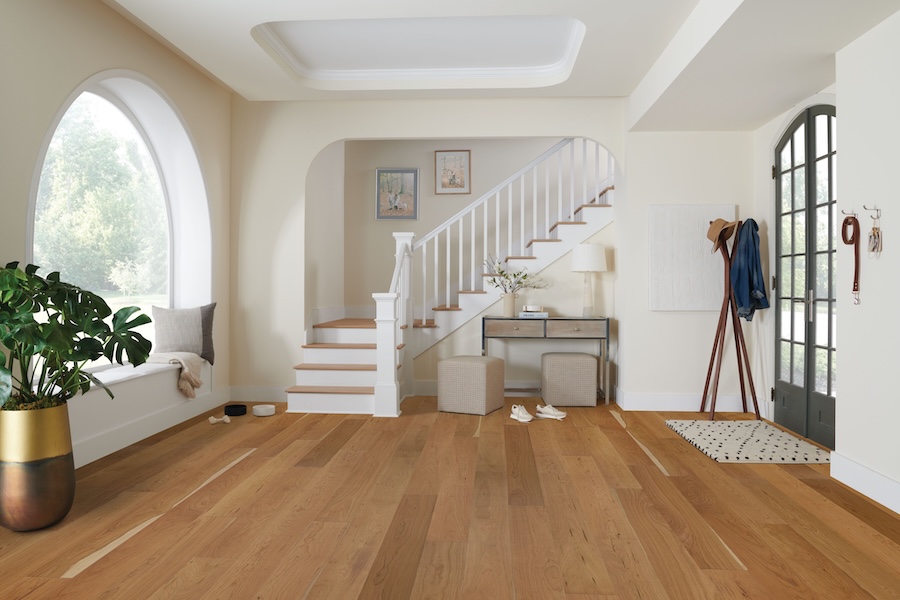 Fortessa densified wood flooring
Selecting the right construction helps ensure the floor performs as beautifully as it looks. Learn more about choosing the right hardwood flooring for your project.
Hardwood Solutions for Remodels and Additions
In older homes, original hardwood floors stop where additions begin. Instead of chasing an almost impossible exact match, designers often choose wood flooring that complements the existing materials, creating a cohesive transition between old and new spaces.
With a wide range of widths, finishes, and constructions available, hardwood flooring can adapt to almost any project—from historic homes to contemporary renovations. Take a deeper dive into "All Things Wood" here.
We’d Love to Hear From You!
The Crossville Studios™ flooring experts at our 27 dedicated locations are here to help you explore hardwood flooring options, from plank widths and finishes to construction types that suit your project. Connect with us today and specify with confidence.