

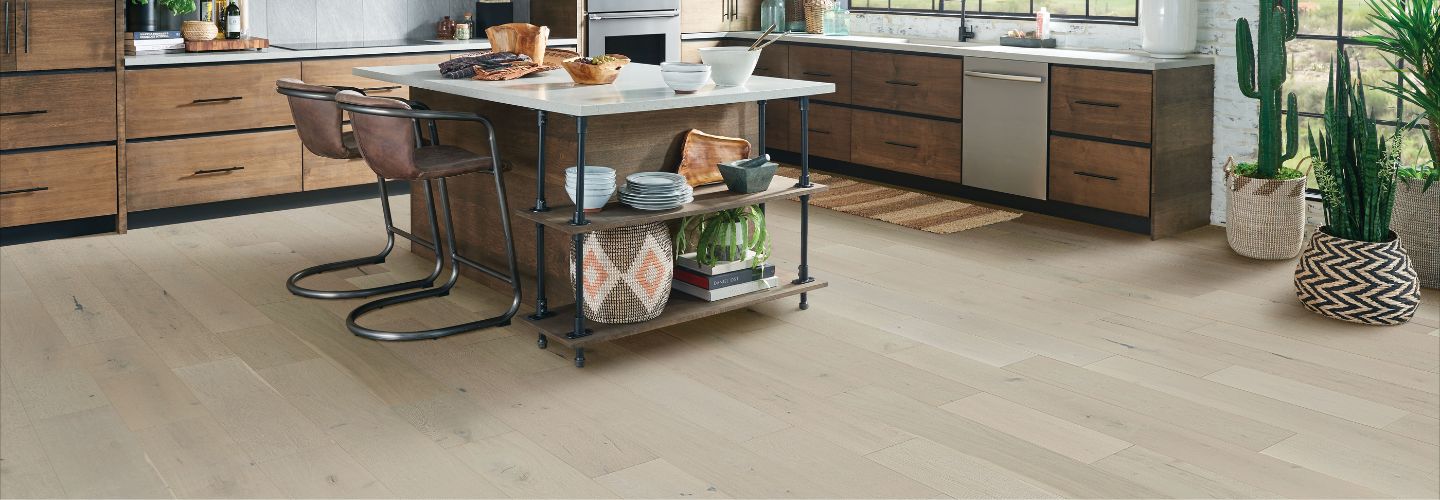
Product & Trends All Things Wood: A Fresh Look at Hardwood Flooring
Jan 15, 2026
Genuine hardwood floors can ground a space like nothing else. They bring warmth, texture, and a sense of authenticity to spaces, whether you’re designing a modern home, a boutique hospitality space, or a design-forward multifamily residence.
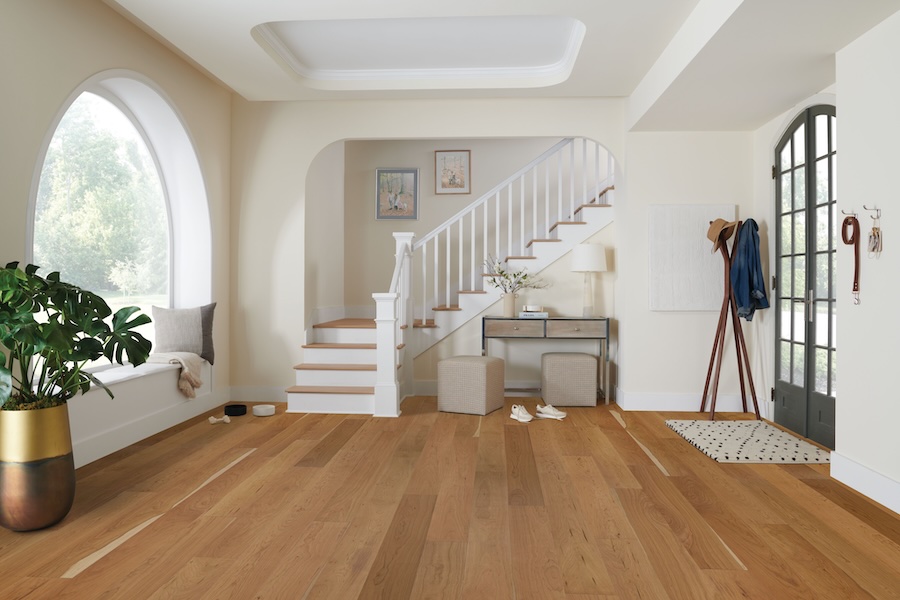
As the way we design and use spaces continues to shift, expectations for hardwood have changed as well. Designers and homeowners are looking for options that balance character with performance, and that can move comfortably between residential and commercial environments.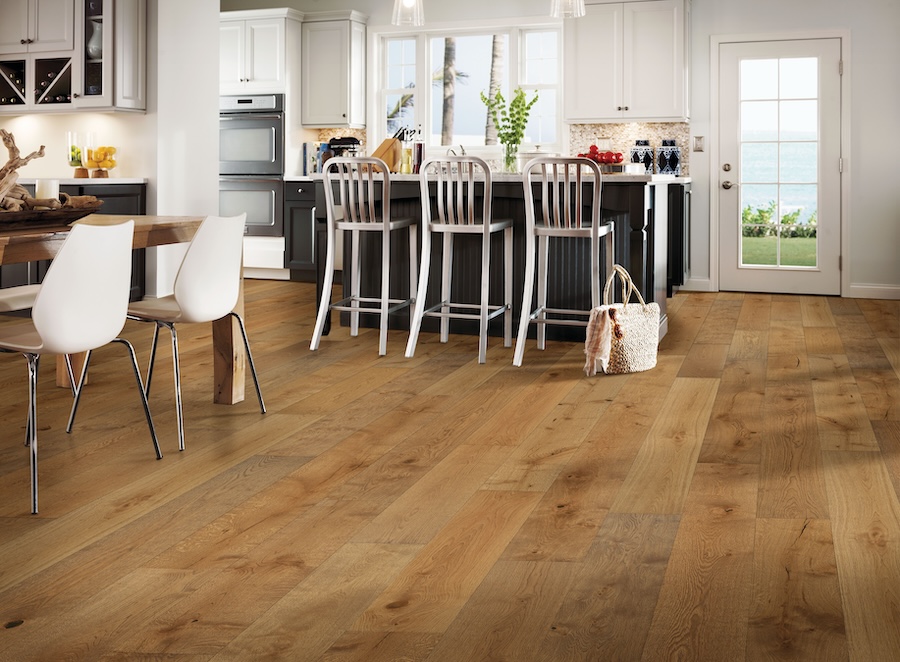 Glenmora™ engineered hadwood flooring
Trends come and go, but hardwood remains a constant in both residential and commercial design. Designers and homeowners alike gravitate toward wood floors for the same reasons they always have: natural variation, visual warmth, and the ability to age gracefully.
Hardwood flooring works across styles—clean and minimal, rustic and textural, tailored and traditional. Wood floors pair effortlessly with stone, tile, metal, and soft surfaces. From a practical standpoint, wood flooring is evolving beyond standard confines—offering greater stability, more flexible installation options, and stronger long-term performance.
Crossville Studio’s hardwood flooring lineup continues to evolve, led by an expanded engineered collection and the introduction of an innovative hardwood technology that opens new possibilities for high-traffic spaces. Alongside these additions, solid hardwood remains an essential part of our wood offering, grounding the collection while newer constructions expand where and how hardwood can be used.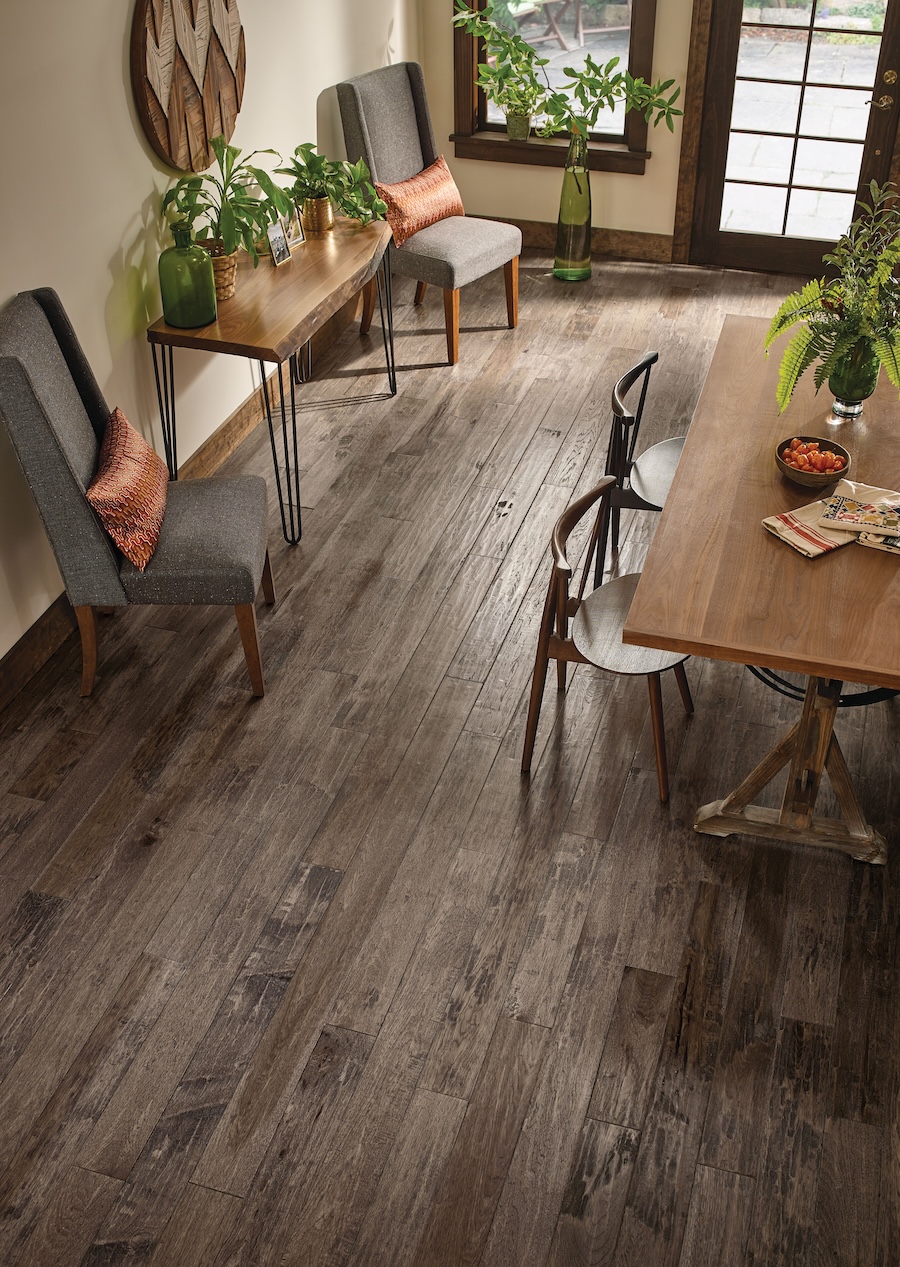 Sawbrier™ soldid hardood flooring
Rooted in tradition, craftsmanship, and permanence, solid hardwood flooring delivers a timeless aesthetic, whether your interior design scheme is traditional, contemporary, or somewhere in between. Made from a single piece of solid hardwood, it delivers the authenticity many homeowners value, along with the ability to be sanded and refinished multiple times over its lifetime.
Solid hardwood is the classic, beautiful choice for the right environments. It performs best in spaces with stable indoor conditions and is favored in primary living areas, historic homes, and long-term residences where floors are expected to evolve over time rather than be replaced. Solid hardwood floors can be sanded many times, and when properly cared for, they can last for decades, or even centuries, developing a rich patina as they age.
That enduring appeal is also why solid hardwood remains a benchmark for comparison as newer wood technologies emerge. It shapes expectations for how wood should look and feel, even as engineered and performance-driven wood flooring options expand where and how hardwood can be used.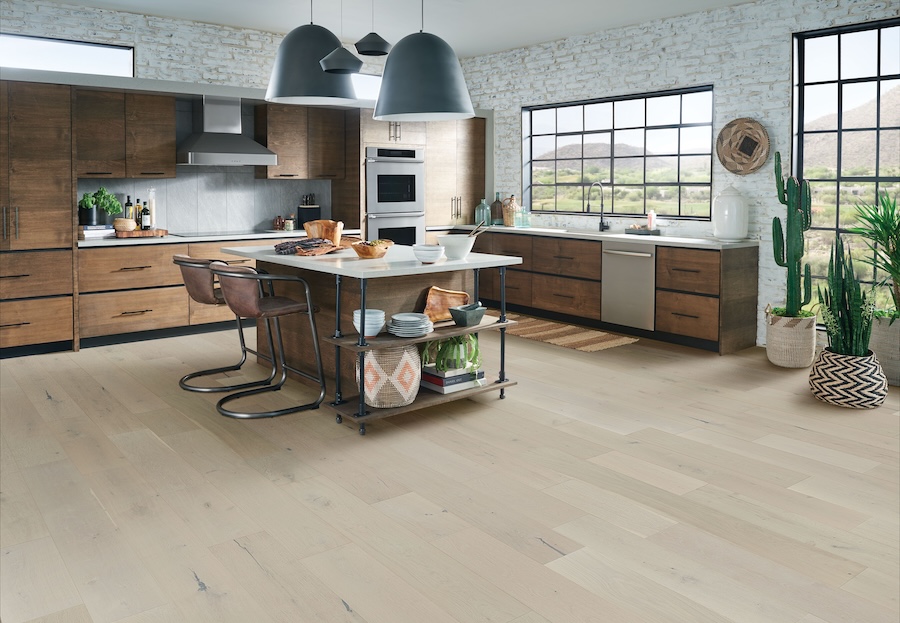 Glenmora engineered hardwood floor
Engineered hardwood flooring is a great flooring option for many projects, especially where moisture is a factor. Constructed with a real wood veneer over a multi-layer core, engineered hardwood offers the same visual authenticity as solid hardwood while providing moisture resistance and dimensional stability, reducing the likelihood of warping or expansion in high humidity. It performs well in spaces where solid wood may not be ideal, including kitchens, bathrooms, and basements.
Depending on the thickness of the veneer, engineered hardwood can typically be refinished one to three times, with an expected lifespan of 20 to 40 years. When longevity and the ability to refinish are important considerations, opt for the thicker veneer.
We’ve recently expanded our premium engineered wood collection, Glenmora™, with:
• An expanded color palette — 28 new European White Oak colors — to support everything from light, Scandinavian-inspired interiors to richer, moodier spaces
• More nine-inch-wide planks added to select colors — this wider format recalls the character of historic wood floors while supporting modern design sensibilities
 Fortessa densified hardwood flooring
A new category of engineered wood, densified hardwood, represents the next evolution in hardwood flooring. Our patent-pending Fortessa™ uses heat and pressure (without chemical fillers or additives) to compress the wood’s surface structure, significantly increasing hardness and durability. The result is genuine wood that is six times more dent-resistant and four times more scratch-resistant than traditional hardwood. It performs exceptionally well in busy, high-traffic settings where conventional hardwood flooring has historically struggled.
Densified hardwood opens new possibilities for real wood in both residential and commercial environments, from busy family homes to more demanding commercial settings. For households with kids and pets, or for commercial spaces that see constant daily wear (think hotel lobbies and restaurants), densified hardwood offers a new level of durability. It retains the look and feel of hardwood while tackling durability concerns that once pushed designers toward other materials.
(In our next post, we’ll take a closer look at how densified hardwood works and how it changes what’s possible for hardwood flooring.)
• Environment: Moisture levels, traffic, and installation conditions
• Aesthetic goals: Plank width, color variation, finish, and overall style
• Performance needs: Stability, durability, and long-term maintenance expectations
Whether that leads you to solid hardwood, engineered wood, or a performance-enhanced option like densified wood, the decision comes down to how each construction responds to environment, use, and long-term wear.
If hardwood flooring is on your radar, you’re in the right place! The Crossville Studios™ flooring pros at our 25 dedicated showrooms are ready to help you explore what’s new, what’s next, and what works best for your project. Connect with us today!
And if densified wood has piqued your curiosity… stay tuned. The deep dive is coming.
As the way we design and use spaces continues to shift, expectations for hardwood have changed as well. Designers and homeowners are looking for options that balance character with performance, and that can move comfortably between residential and commercial environments.
Why Hardwood Still Matters
Glenmora™ engineered hadwood flooring Trends come and go, but hardwood remains a constant in both residential and commercial design. Designers and homeowners alike gravitate toward wood floors for the same reasons they always have: natural variation, visual warmth, and the ability to age gracefully.
Hardwood flooring works across styles—clean and minimal, rustic and textural, tailored and traditional. Wood floors pair effortlessly with stone, tile, metal, and soft surfaces. From a practical standpoint, wood flooring is evolving beyond standard confines—offering greater stability, more flexible installation options, and stronger long-term performance.
Crossville Studio’s hardwood flooring lineup continues to evolve, led by an expanded engineered collection and the introduction of an innovative hardwood technology that opens new possibilities for high-traffic spaces. Alongside these additions, solid hardwood remains an essential part of our wood offering, grounding the collection while newer constructions expand where and how hardwood can be used.
Solid Hardwood: Timeless, Authentic, Enduring
Sawbrier™ soldid hardood flooring Rooted in tradition, craftsmanship, and permanence, solid hardwood flooring delivers a timeless aesthetic, whether your interior design scheme is traditional, contemporary, or somewhere in between. Made from a single piece of solid hardwood, it delivers the authenticity many homeowners value, along with the ability to be sanded and refinished multiple times over its lifetime.
Solid hardwood is the classic, beautiful choice for the right environments. It performs best in spaces with stable indoor conditions and is favored in primary living areas, historic homes, and long-term residences where floors are expected to evolve over time rather than be replaced. Solid hardwood floors can be sanded many times, and when properly cared for, they can last for decades, or even centuries, developing a rich patina as they age.
That enduring appeal is also why solid hardwood remains a benchmark for comparison as newer wood technologies emerge. It shapes expectations for how wood should look and feel, even as engineered and performance-driven wood flooring options expand where and how hardwood can be used.
Engineered Hardwood: The Best of Both Worlds
Glenmora engineered hardwood floorEngineered hardwood flooring is a great flooring option for many projects, especially where moisture is a factor. Constructed with a real wood veneer over a multi-layer core, engineered hardwood offers the same visual authenticity as solid hardwood while providing moisture resistance and dimensional stability, reducing the likelihood of warping or expansion in high humidity. It performs well in spaces where solid wood may not be ideal, including kitchens, bathrooms, and basements.
Depending on the thickness of the veneer, engineered hardwood can typically be refinished one to three times, with an expected lifespan of 20 to 40 years. When longevity and the ability to refinish are important considerations, opt for the thicker veneer.
We’ve recently expanded our premium engineered wood collection, Glenmora™, with:
• An expanded color palette — 28 new European White Oak colors — to support everything from light, Scandinavian-inspired interiors to richer, moodier spaces
• More nine-inch-wide planks added to select colors — this wider format recalls the character of historic wood floors while supporting modern design sensibilities
Hardwood Reimagined: Densified Hardwood
Fortessa densified hardwood flooringA new category of engineered wood, densified hardwood, represents the next evolution in hardwood flooring. Our patent-pending Fortessa™ uses heat and pressure (without chemical fillers or additives) to compress the wood’s surface structure, significantly increasing hardness and durability. The result is genuine wood that is six times more dent-resistant and four times more scratch-resistant than traditional hardwood. It performs exceptionally well in busy, high-traffic settings where conventional hardwood flooring has historically struggled.
Densified hardwood opens new possibilities for real wood in both residential and commercial environments, from busy family homes to more demanding commercial settings. For households with kids and pets, or for commercial spaces that see constant daily wear (think hotel lobbies and restaurants), densified hardwood offers a new level of durability. It retains the look and feel of hardwood while tackling durability concerns that once pushed designers toward other materials.
(In our next post, we’ll take a closer look at how densified hardwood works and how it changes what’s possible for hardwood flooring.)
Choosing the Right Wood Floor
With more options comes a better opportunity to specify the right product for the right space. When selecting wood flooring, consider:• Environment: Moisture levels, traffic, and installation conditions
• Aesthetic goals: Plank width, color variation, finish, and overall style
• Performance needs: Stability, durability, and long-term maintenance expectations
Whether that leads you to solid hardwood, engineered wood, or a performance-enhanced option like densified wood, the decision comes down to how each construction responds to environment, use, and long-term wear.
All Things Wood—Right Here
Wood flooring isn’t a one-size-fits-all, and that’s why our hardwood offerings continue to grow. From classic hardwood to engineered options and new advancements like densified wood, we’re focused on giving designers and homeowners more ways to use hardwood with confidence.If hardwood flooring is on your radar, you’re in the right place! The Crossville Studios™ flooring pros at our 25 dedicated showrooms are ready to help you explore what’s new, what’s next, and what works best for your project. Connect with us today!
And if densified wood has piqued your curiosity… stay tuned. The deep dive is coming.