

Product & Trends Engineered, Solid, or Densified Hardwood Flooring? Let Us Help You Decide.
Feb 28, 2026Solid, engineered, and densified hardwood flooring each brings distinct strengths. The real decision isn’t about which one is “better.” It’s about which one makes the most sense for the space, the way it will be used, and the expectations for how it should perform over time.
At Crossville Studios™, we have this conversation every day — helping homeowners and interior designers weigh aesthetics, durability, installation conditions, and long-term value. Once you match the hardwood flooring type to the demands of your space, the right choice stands out.
Solid Hardwood: Timeless and Traditional
Solid hardwood is exactly what it sounds like: a single piece of wood milled from top to bottom. It’s classic, can be refinished many times, and carries the authenticity many people associate with traditional hardwood flooring.
Solid wood performs best in above-grade environments with stable humidity levels. Bedrooms, living rooms, and formal spaces are ideal applications. Where solid hardwood flooring can struggle is below grade or in areas with fluctuating moisture.
Solid wood flooring should only be installed on or above grade (ground level), preferably on a plywood subfloor (not concrete or particle board), in locations with a controlled level of humidity.
Traditional hardwood flooring is about heritage. It’s familiar, enduring, and long-lasting when installed in the right conditions.
Explore our solid hardwood flooring collections.
Sawbrier™
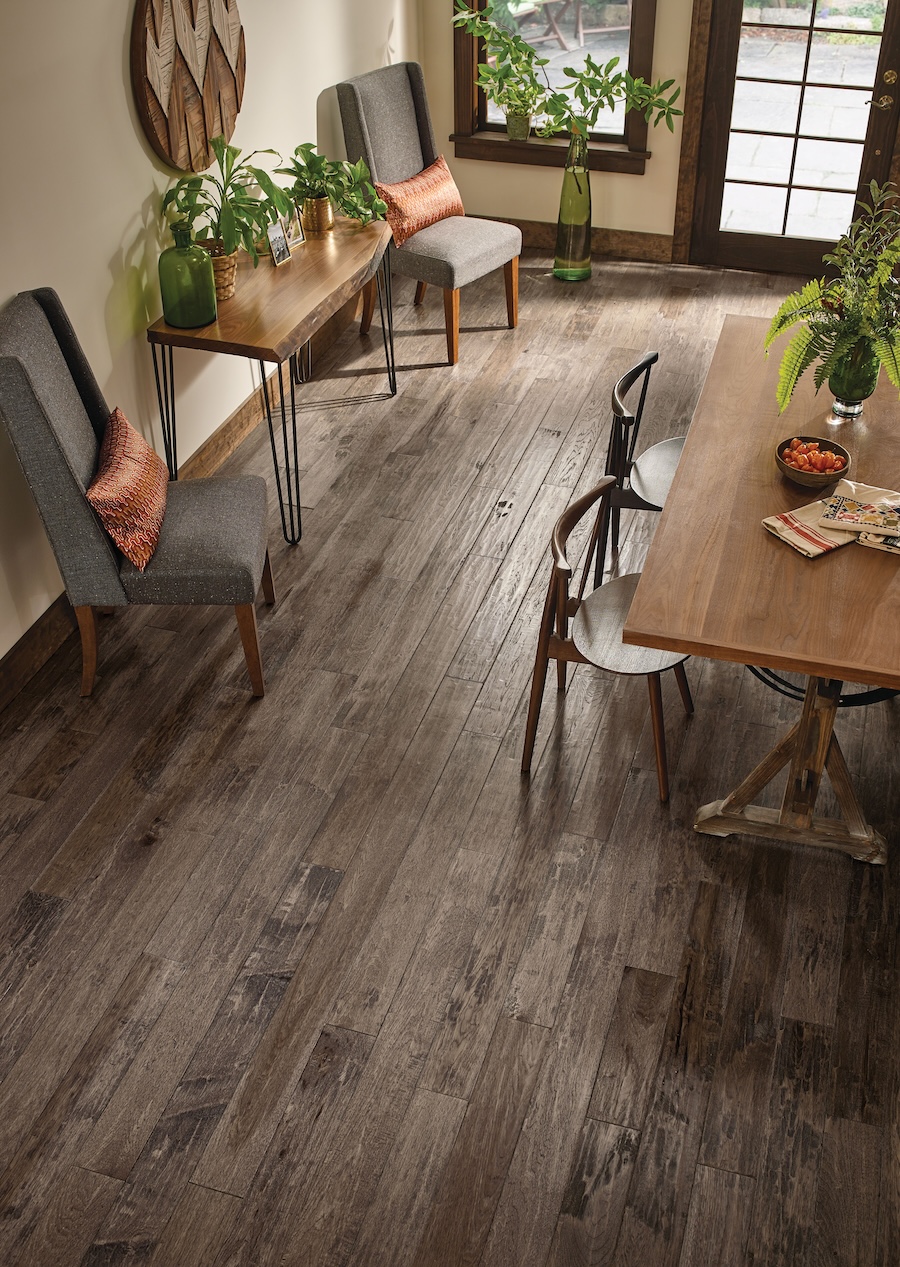
Our Sawbrier solid hardwood flooring collection in hickory comes in 5" wide planks and three stain options.
Disston™
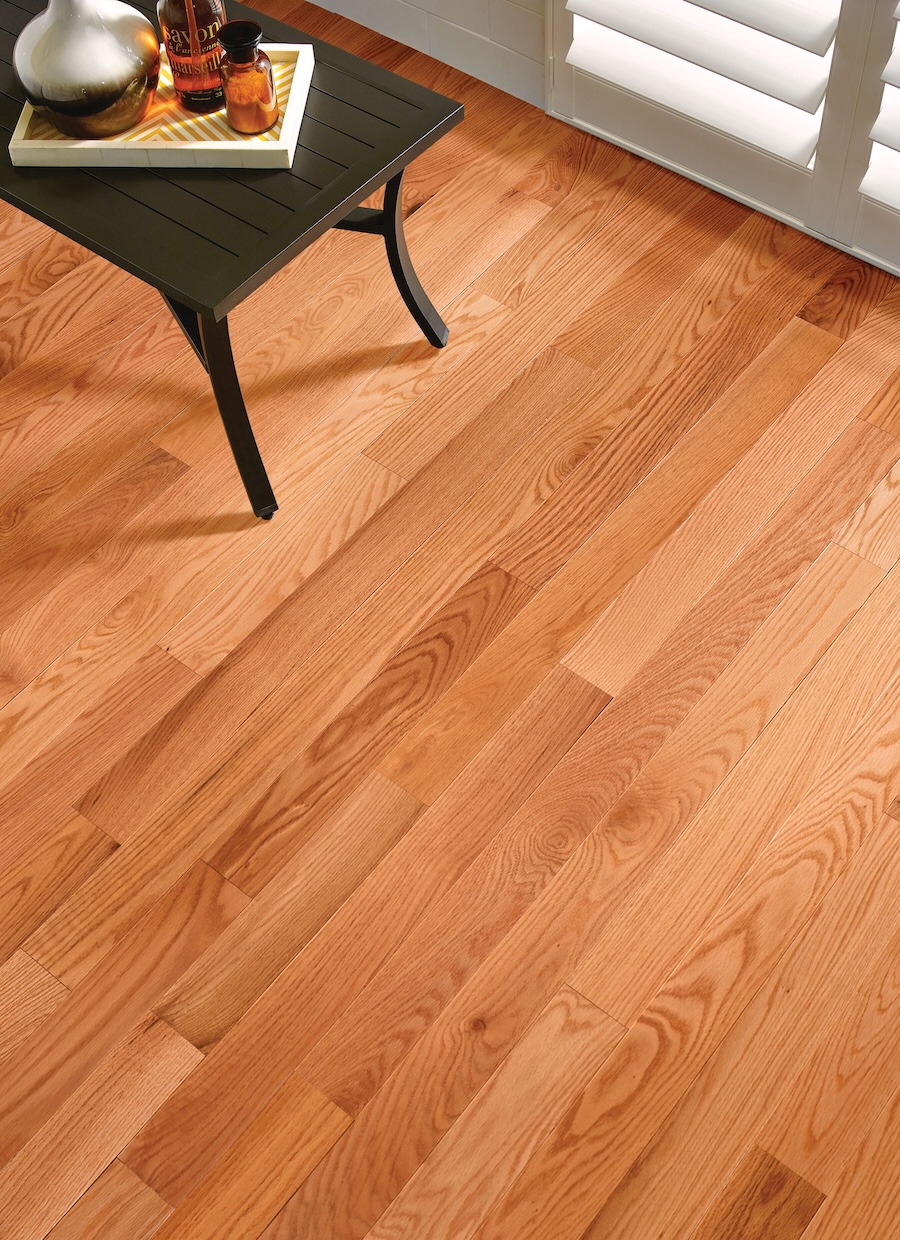 Available in six stains in oak, Disston solid hardwood planks come in 3 1/4" to 4" widths.
Grandin Grove™
.jpg?lang=en-US) Grandin Grove solid hardwood planks in hickory and oak are available in five stains and 2 1/4" to 5" widths.
Grandin Grove solid hardwood planks in hickory and oak are available in five stains and 2 1/4" to 5" widths.
Engineered Hardwood: Stability with Flexibility
Engineered hardwood features a real wood surface bonded to a layered wood core. That core is built from multiple layers arranged in alternating directions, a structure that improves dimensional stability and helps the material respond more evenly to humidity changes.
This layered construction reduces the likelihood of expansion and contraction that can lead to cupping, crowning, or gapping. Because of their enhanced stability, engineered hardwood floors can be installed in homes built on most any subfloor, including concrete slabs. You can really use engineered wood flooring in any room in your home — it's perfect for rooms where moisture levels fluctuate, such as kitchens and bathrooms, and can even be used in basements. Engineered wood flooring can also be sanded and refinished, but not as many times as solid wood flooring. Opt for a thicker veneer if you think you might want to refinish the floors in the future.
Beyond its performance characteristics, the hardwood veneer provides the same beautiful variation and character found in solid hardwood. And with so many wood species, colors, and finishes available, engineered hardwood can complement any décor style.
Explore our engineered hardwood flooring options.
Bacova™
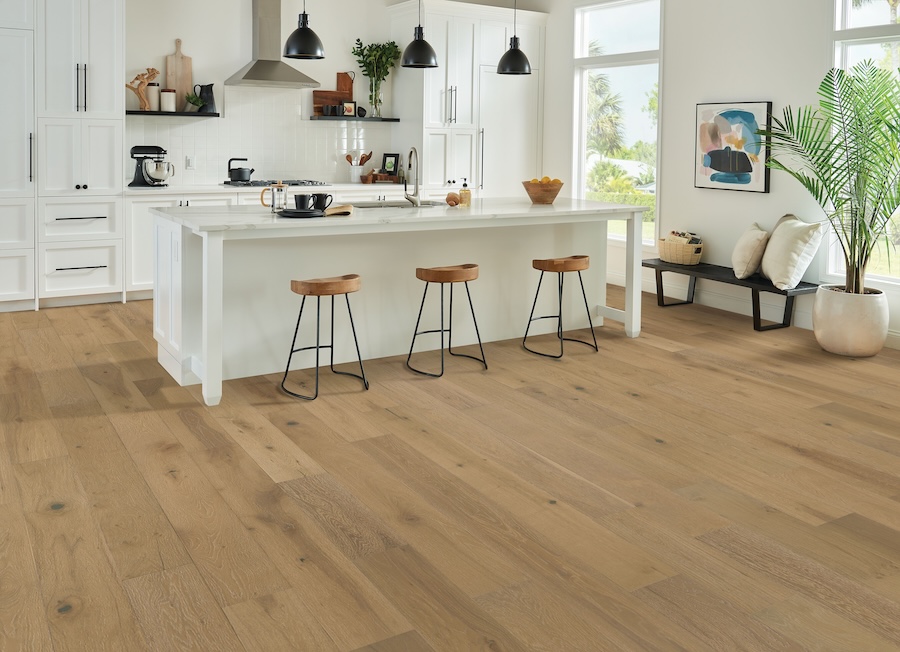 Our Bocova engineered wood planks in white oak come in a 7 1/2" width and 9 colors.
Glenmora™
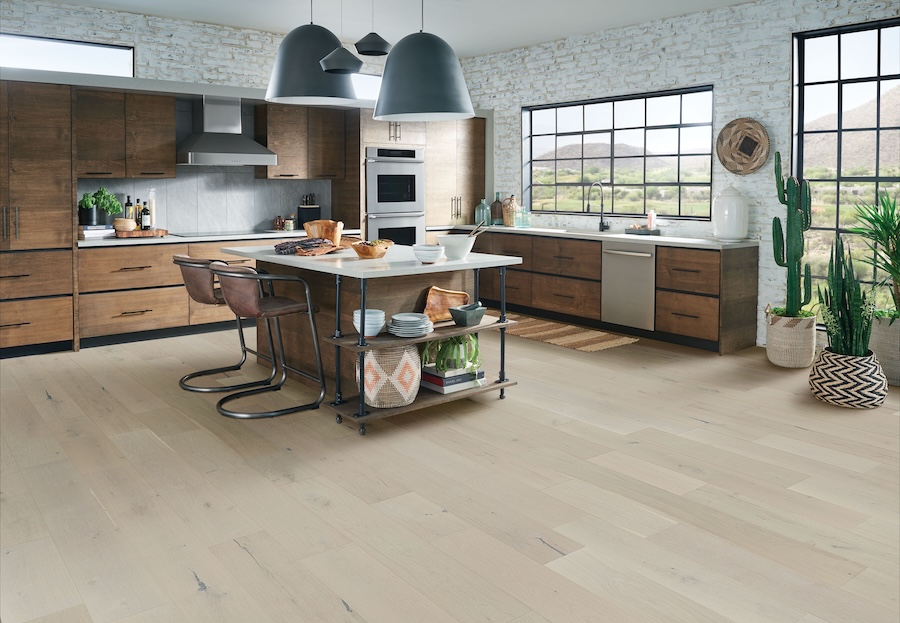 Our Glenmorea engineered wood flooring collection in white oak and hickory has expanded to a whopping 33 colors and is available in widths from 6" to 9" (selected colors).
Goodman™
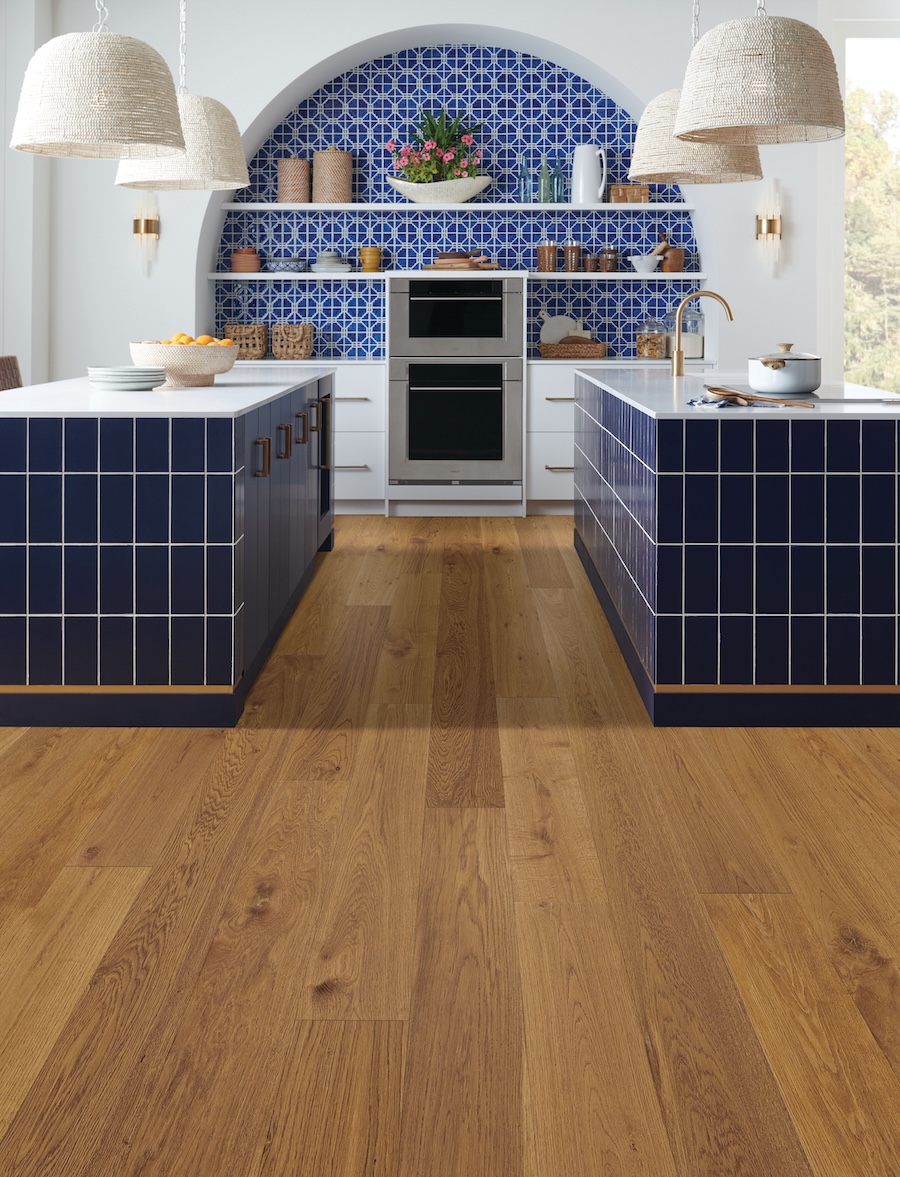 Goodman engineered wood flooring planks in white oak are 7 1/4" wide and are available in ten colors.
Densified Hardwood: Elevated Performance
Densified hardwood is a type of engineered flooring that is compressed, increasing surface density and hardness. The patented manufacturing process is natural, using only heat and pressure, with no fillers or chemicals. Densified hardwood flooring maintains the warmth and character of real wood while delivering enhanced performance.
In practical terms, that means greater resistance to dents and wear — it is six times more dent-resistant and four times more scratch-resistant than traditional hardwood. With densification, soft woods not usually suitable for flooring, like pine, can be installed in high-traffic spaces.
This means that even high-traffic commercial spaces like hotels, restaurants, and boutiques can have real hardwood flooring that withstands thousands of footsteps, rolling luggage, high heels, and more. At home, densified hardwood floors are perfect for active households with children and pets — in any areas of the home where durability matters just as much as aesthetics.
For those who love solid hardwood but worry about durability, densified hardwood flooring shifts the conversation from hesitation to confidence.
Fortessa™
.jpg?lang=en-US) Our Fortessa densified hardwood flooring is available in walnut, maple, red maple. cherry, pine, and ash in ten stains and an 8 1/2" width.
Our Fortessa densified hardwood flooring is available in walnut, maple, red maple. cherry, pine, and ash in ten stains and an 8 1/2" width.
It’s Not an Either/Or Decision
Here’s the reality: most homes and projects don’t have to commit to just one type.You might choose solid in a primary suite, engineered in the kitchen, and densified in a busy family room. Thoughtful specification means matching the material to the demands of each space.
The goal isn’t just to pick a category. The goal is alignment so that performance, aesthetics, and lifestyle all work together.
See the Difference in Person
Technical distinctions matter, and so do plank width, texture, stain depth, and finish. These details shape how the floor feels and performs over time.That’s why comparing samples side by side makes such a difference. Seeing and touching the materials reveals nuances that can’t be evaluated on a screen.
Whether you’re renovating your own home or specifying for a client, the flooring pros at our 25 showroom locations are here to walk through the options and help you make a confident, informed decision. Connect with us today!