


Product & Trends Design Trend Alert: Terracotta is Everywhere!
Nov 05, 2026Updated
One of the hottest design trends today, Terracotta, has permeated all aspects of interior design. It’s a color, it’s a material, and it’s a finish. From terracotta tiles and clay pots to paint colors, fabrics, and other decorative items, terracotta speaks of craftsmanship, heritage, and tactility. Colors in the terracotta realm include hues such as burnt orange, rust, salmon, coral, peach, tangerine, and persimmon. Terracotta floors, walls, and terracotta-colored wall paints and textiles are associated with warmth and a comfortable lifestyle. The shade is uplifting, refreshing, and grounding.
A Brief History of Terracotta
Terracotta in Ancient Times
Translated from Italian, terracotta literally means “baked earth.” This ancient material dates back thousands of years: in Chinese Pottery (from 10,000 BCE), Greek Pottery (from 7,000 BCE), and Mesopotamian and Egyptian arts and sculptures. The oldest known work of terracotta sculpture (26,000 - 24,000 BCE) was found at a Stone Age settlement in the Moravian basin in the Czech Republic. This prehistoric art piece is known as the Venus of Dolní Věstonice.

By "Petr Novák, guidance: Danny B., CC BY-SA 2.5, via Wikimedia CommonsCitation: Venus of Dolní Věstonice. (2023, September 13). In Wikipedia.
The Chinese Terracotta Army, considered one of the greatest works in the sphere of terracotta sculpture, was made during the time of Qin Dynasty art (221-206 BCE). The Terracotta Army is a collection of terracotta sculptures depicting the armies of Qin Shi Huang, the first emperor of China. It is a form of funerary art buried with the emperor to protect him in his afterlife.
 Terracotta Army, J mhullot, CC BY 3.0 via Wikimedia Commons
Terracotta in the 19th Century
In the 19th Century, the Arts and Crafts movement approved terracotta as a building material, as it was considered a handmade material designed by artisans. From 1860 to 1970, architects in England and America used unglazed terracotta to ornament the outer walls of buildings.
Aside from its literal translation, “terracotta” refers to ceramics made from terracotta clay or the clay itself. Terracotta clay has a high iron oxide content, and the amount of iron in the clay determines the color. Terracotta may appear cream, tan, dark brown, yellow, red, orange, pink, or grey. Terracotta tiles were handcrafted into many different shapes, making each tile unique. Common shapes were square, rectangular, hexagon, and parquet.
One superb example of a terracotta facade is the Natural History Museum in London. The museum has an ornate terracotta facade typical of high Victorian architecture. The terracotta moldings represent the past and present diversity of nature.

Natural History Museum in London, by Diliff, CC BY-SA 3.0 via Wikimedia Commons
The Bell Edison Telephone Building in Birmingham, England, is a fantastic example of Victorian terracotta architecture.
 By Oosoom at English Wikipedia, CC BY-SA 3.0

Terracotta in the 20th Century
What do three of the most iconic buildings of the early 20th Century have in common? The Flat Iron Building in New York, the Arctic Club Building in Seattle, and the Wrigley Building in Chicago all feature intricate terracotta cladding. In the early 20th Century, glazed terracotta tiles mimicked elaborately carved stone, making the material a popular choice for building exteriors.
 Flat Iron Building in NYC by Fred PO, CC BY-SA 2.0 via Wikimedia Commons
Arctic Club in Seattle, by Hbobrien, CC BY-SA 3.0, via Wikimedia Commons

Wrigley Building in Chicago, by Ken Lund from Reno, Nevada, USA, CC BY-SA 2.0, via Wikimedia Commons

Glazed terracotta tiles also became extremely popular for the school's interiors and exteriors, hospitals, and other spaces requiring special hygienic conditions.
Although architectural terracotta largely disappeared by the mid-20th Century, there is an active market today for terracotta restoration products to maintain the legacy of landmark terracotta buildings.
21st Century Terracotta
Not only has terracotta been an available building and sculptural material for thousands of years, but it also has a long history of being popular. Think of terracotta sculptural art and exterior cladding, Spain’s terracotta roofs, the terracotta brick courtyards found in the South’s oldest cities, and the terracotta floors of provincial French cottages of 150 years ago.
Today’s surge in popularity shows that terracotta tiles are still on trend. But for superior durability and easy maintenance, terracotta-inspired ceramic and porcelain tiles are often better alternatives for areas prone to high traffic or moisture.
Let's look at our ceramic and porcelain terracotta-inspired tiles selections, plus a new line made from...well, actual terracotta!
Mestizaje Ceramic Tile
 Mestizaje's Chateau floor tiles are inspired by graceful French antique terracotta, with the beauty of clay in chalky colors embellished by the passage of time.
Terre Porcelain Tile
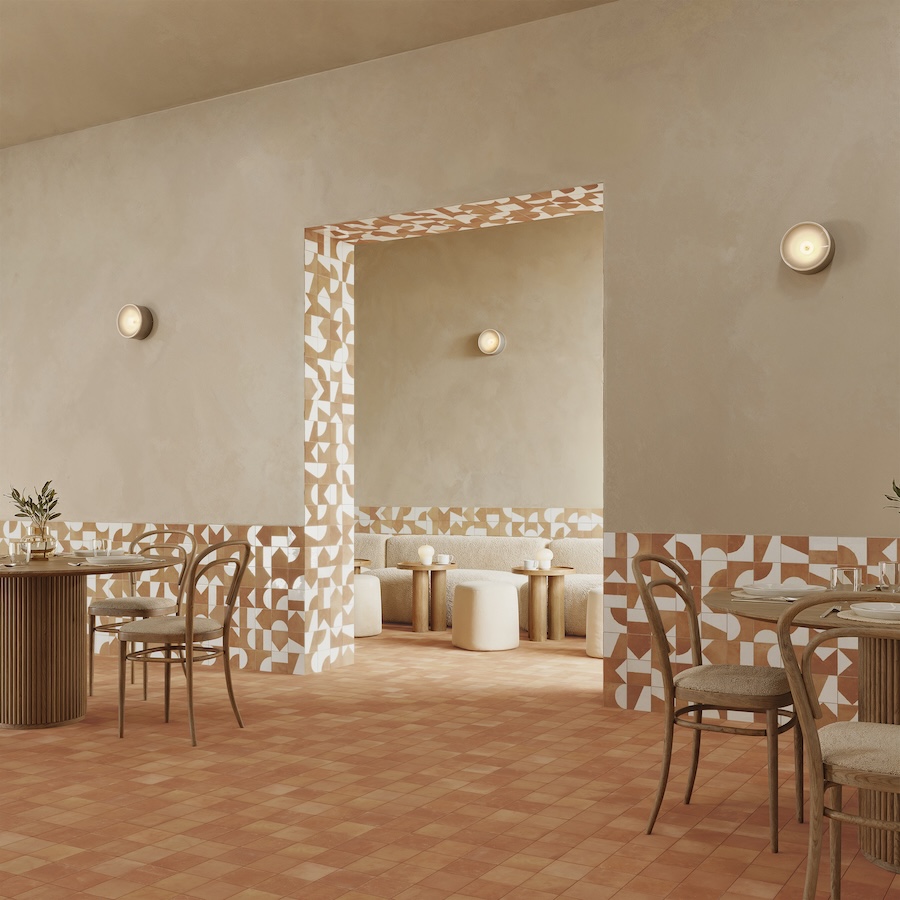 Terre porcelain tile celebrates the beauty of handcrafted clay, pairing earthy textures with crystalline textures inspired by natural minerals. Available in square and elongated rectangular formats, Terre brings artisanal character and rich color to walls.
Cotto Andaluz Terracotta Tiles
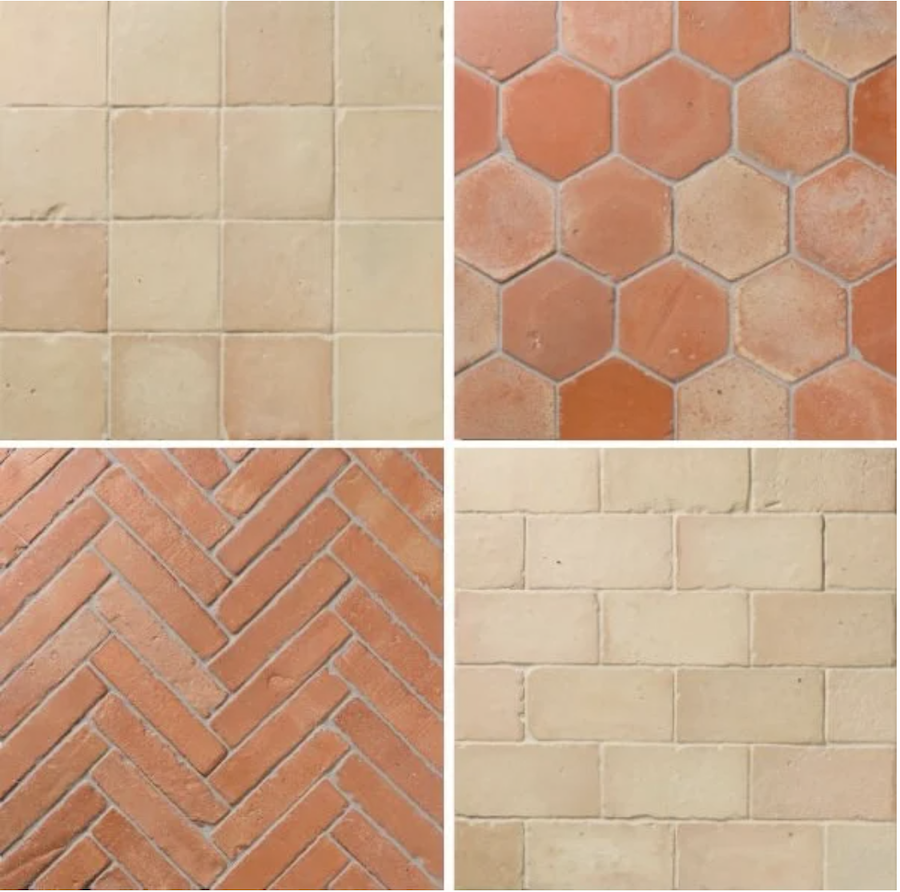 Cotto Andaluz authentic terracotta tiles recall the antique terracotta floors of Spain and Morocco, where this material has been used for centuries. Completely handmade from clay preparation through shaping, each tile is finished with a Rustico texture that enhances its old-world character.
Bejmat Porcelain Tile

Our Bejmat floor and wall tile collection is inspired by the iconic Moroccan Zellige trend. The tiles have a handmade look, with many colorways lending a terracotta vibe.
Barcelona Porcelain Tile
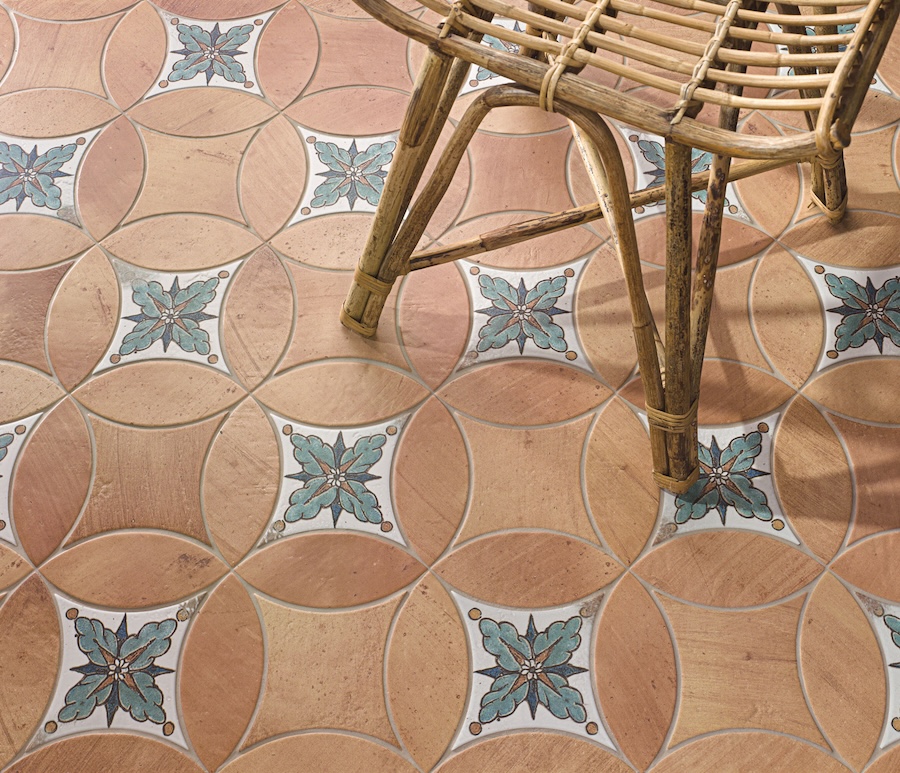 Barcelona porcelain tile captures the character of traditional terracotta in durable extruded porcelain with a refined matte finish. Its two complementary shapes, Nexus and Leaf, offer creative layout and pattern possibilities, while coordinating decorative pieces add another layer of visual interest.
Roots Porcelain Tile
 Our Roots floor and wall tile collection offers an authentic, aged terracotta look and can be used anywhere, particularly outdoors.
Mud Porcelain Tile

Showcasing an organic-based color palette linked by earth and two traditional decors, “paths” and “pottery,” Mud floor and wall tile breathes authenticity and character into designs.
Stardust Porcelain Tile
 A terracotta look with a twist!! The Stardust floor and wall tile collection is inspired by outer space; the matte, artisanal-look tiles look as though stellar and lunar particles have landed on the surface.
Icon Terracotta Tile

Simple, light, and devoid of decoration, Icon terracotta tile offers minimalist character in geometric perfection. These terracotta-like pieces can be custom colored for endless design possibilities.
Let's Bring Your Design Vision to Life
Looking to incorporate the hottest design trends into your interior design? These terracotta-inspired collections are just some of the on-trend tile styles Crossville Studios offers. Our tile pros at 27 dedicated locations are ready to assist you in exploring the latest tile trends and help you specify your tile projects with confidence. Connect with us today!