

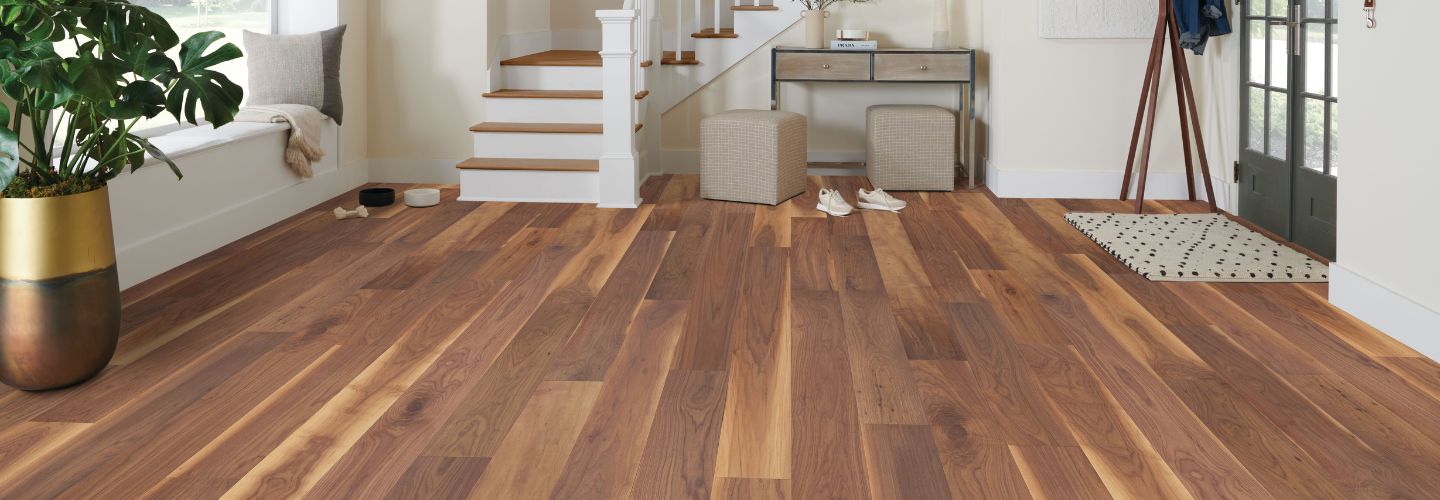
Product & Trends Hardwood Species Spotlight: Walnut
Sep 30, 2026Walnut has a look that’s hard to confuse with anything else. Rich brown color, darker heartwood, tight grain, and natural variation have made it a favorite for everything from fine furniture to hardwood flooring.
Meet Walnut
 There are 21 walnut species, with the most commercially important species grown for both timber and nuts. American Walnut, also known as Black Walnut (Juglans nigra), is the most popular and widely recognized walnut species for flooring. It originates from North America and is prized for its rich chocolate-brown color with subtle purple or gold undertones.
The largest American walnut trees can grow more than 100 feet tall, although most fall within the 75- to 100-foot range. Their trunks typically measure 2 to 4 feet across. Walnut trees are deciduous and are among the first trees to drop their leaves in the fall.
What Does Walnut Wood Look Like?
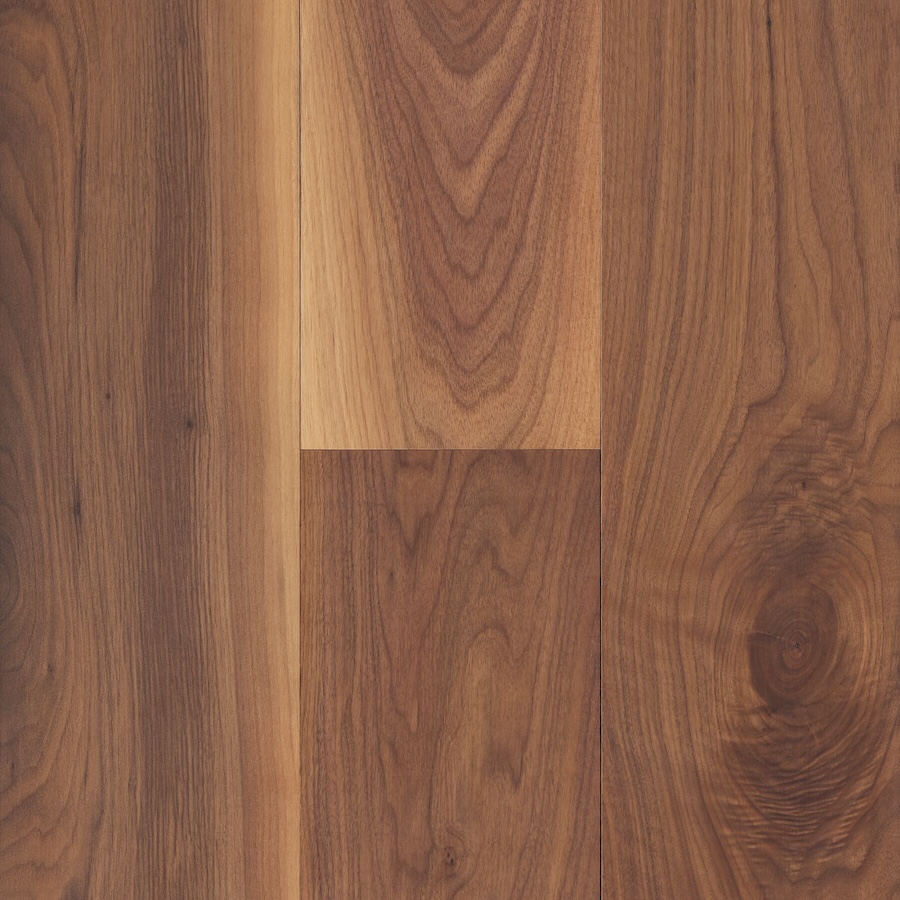
Walnut is a hard, tight-grained wood that is dense and shock-resistant. Despite its hardness, it is also exceptionally easy to work with. The grain can vary considerably within a single tree, and some types of walnut are especially prized for their unusual and beautiful grain patterns.
Walnut is also known for its rich, warm color. The sapwood ranges from creamy white, while the heartwood can deepen to dark chocolate brown or even purplish black. When air-dried, walnut can develop a rich purplish-brown color, and the wood polishes to a very smooth finish.
That combination of color, hardness, and grain has long made walnut a prized wood for furniture, flooring, and carving. Walnut is generally considered a specialty wood rather than a construction wood.
How to Identify a Walnut Tree
Walnut trees have several recognizable characteristics. Alternate branching: Walnut trees have alternate branching, meaning the side branches are staggered along the branch rather than growing directly opposite one another.
Compound Leaves
Walnut trees have compound leaves made up of a main stem and multiple dark green leaflets. The long stem can reach up to 24 inches, with 13 to 23 separate leaflets forming a single leaf. The leaflets are smooth-edged and measure about three inches long.
.JPG)
Patterned Bark
Walnut bark has a uniformly rough texture, with furrows and ridges that intersect to create a diamond-like pattern. The bark ranges through dark shades of gray, and some walnut trunks can appear almost black from a distance.

H. Zell, CC BY-SA 3.0, via Wikimedia Commons
Flowers
Both male and female flowers emerge in spring. Male flowers appear as drooping yellow-green catkins (slim, cylindrical flower clusters with inconspicuous or no petals), while female flowers grow in reddish, spiky clusters.
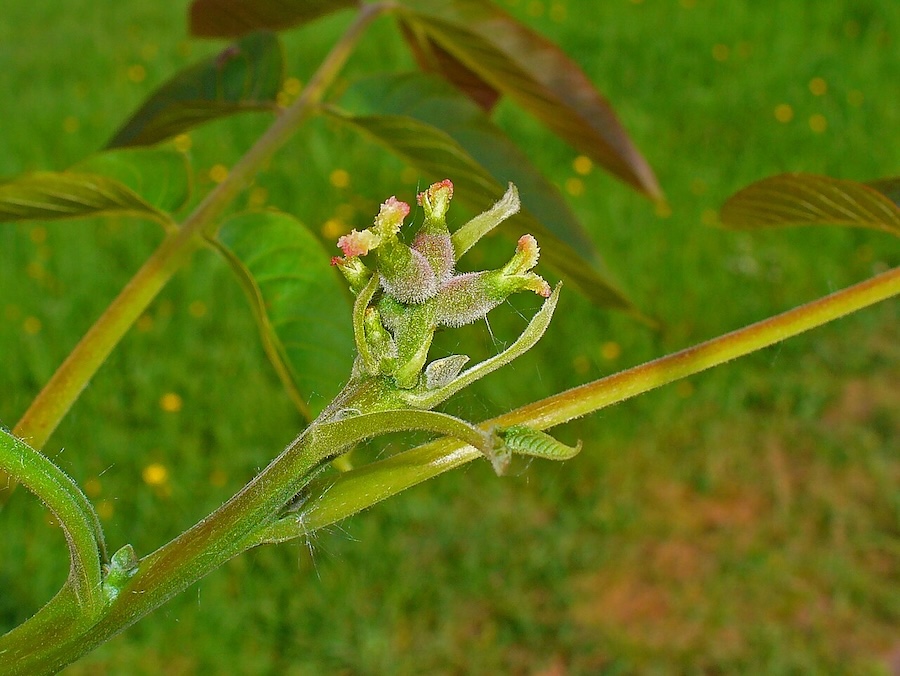 Black oak female flowers
 Black walnut tree catkins and young leaves, Ravenscourt Park by David Hawgood, CC BY-SA 2.0, via Wikimedia Commons
Fruit
The fruit of the walnut tree is, of course, the walnut. The nut is enclosed in a green, leathery husk that is inedible, and the entire fruit, including the husk, falls in autumn.
 Vmenkov, CC BY-SA 3.0, via Wikimedia Commons
From the Forest to the Floor
Walnut brings together a distinctive combination of rich color, tight grain, hardness, and natural variation.
Its deep tones and characteristic grain make it a prized wood not only for hardwood flooring but also for gunstocks, musical instruments, carving, decorative paneling, and fine cabinetry. Its workability also makes walnut a favorite among woodworkers because it cuts, carves, turns, sands, and finishes well, despite being hard and dense.
2014 Gibson SG Standard Walnut, Freebird from Madrid, Spain, CC BY-SA 2.0, via Wikimedia Commons
.jpg)
From Species to Surface
Walnut’s rich color and distinctive grain take on a new dimension in Fortessa™ densified hardwood, available through Crossville Studios. Densification increases the hardness and durability of the real walnut surface while preserving the warmth, grain, and natural variation that make the species so recognizable.
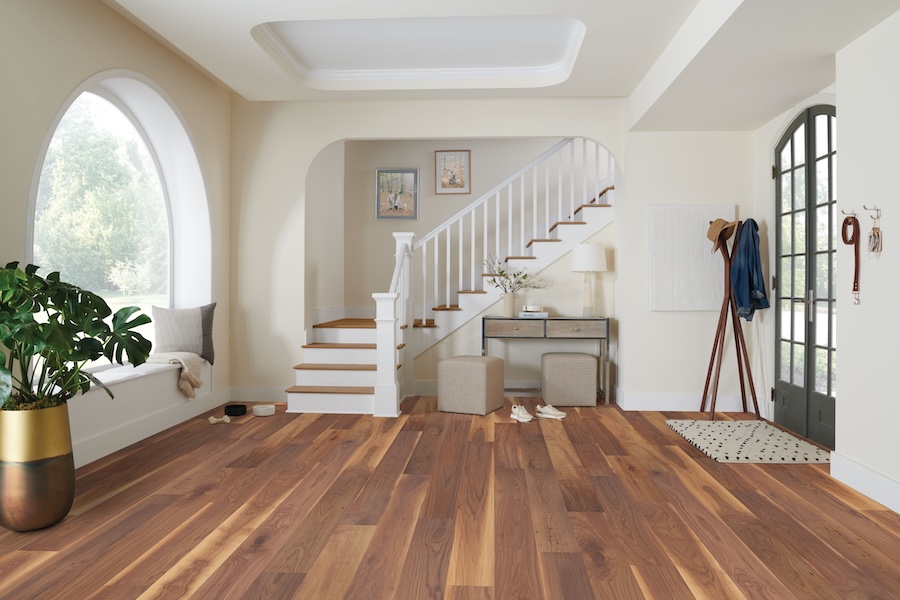 Fortessa densified hardwood flooring in Walnut.
With walnut, our Hardwood Species Spotlight series comes to a close—but the differences among species are exactly what make real wood flooring so interesting.
Bring the Right Hardwood Home
The wood flooring pros at Crossville Studios locations can help you turn what you’ve learned about species into the right flooring choice for your project. From solid and engineered hardwood to species, color, finish, performance, installation, and long-term care, they can help you sort through the details and find the floor that fits. Connect with us today!