

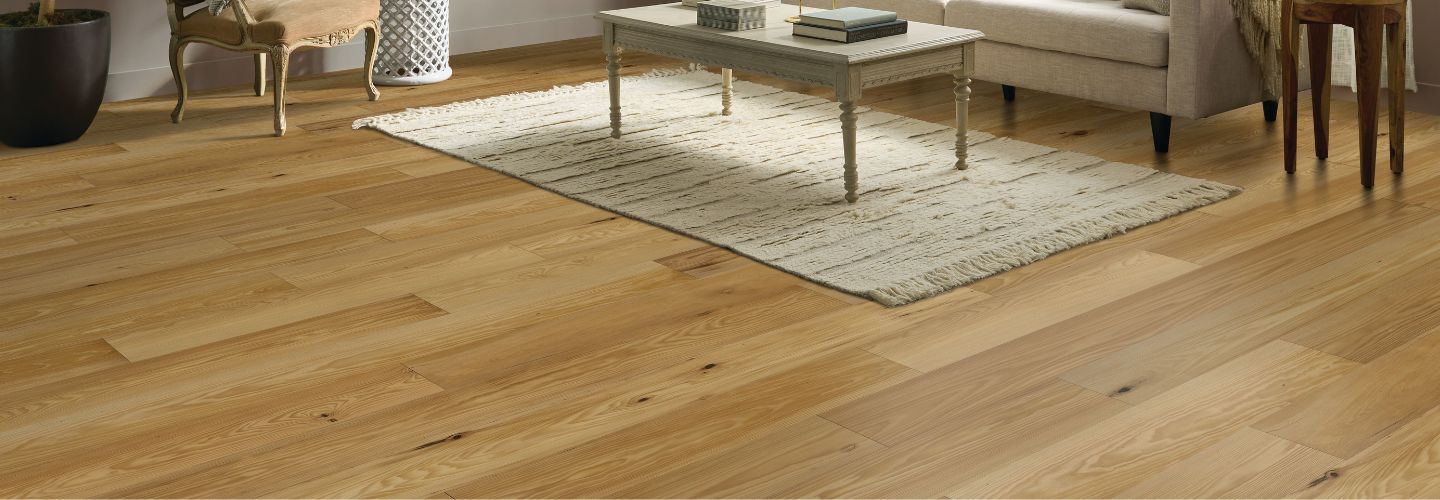
Product & Trends Wood Species Spotlight: Pine
Sep 18, 2026Our Hardwood Species Spotlight series takes a closer look at the trees behind hardwood flooring—how they grow, how to recognize them, what the wood looks like, and what makes each species distinctive.
Pine is the exception. Botanically, it’s a softwood, and naturally it’s softer than many woods commonly used for flooring. So why are we including it? Because what happens to pine through densification makes it a particularly interesting part of today’s wood flooring landscape. We’ll get to that. First, let’s meet the tree.
Meet Pine
 Serebit, CC BY-SA 4.0, via Wikimedia Commons
Pine is a broad group of evergreen conifers in the genus Pinus, with individual species growing across much of North America and other parts of the Northern Hemisphere. Depending on the species and growing conditions, pine trees can range enormously in size. Eastern white pine, for example, can reach well over 100 feet, while other pine species remain considerably smaller.
Unlike the deciduous hardwoods we’ve covered so far, pines keep their needle-like leaves throughout the year. Pine needles grow in bundles called fascicles, typically containing between two and five needles depending on the species—a useful characteristic when identifying one pine from another.
What Does Pine Wood Look Like?
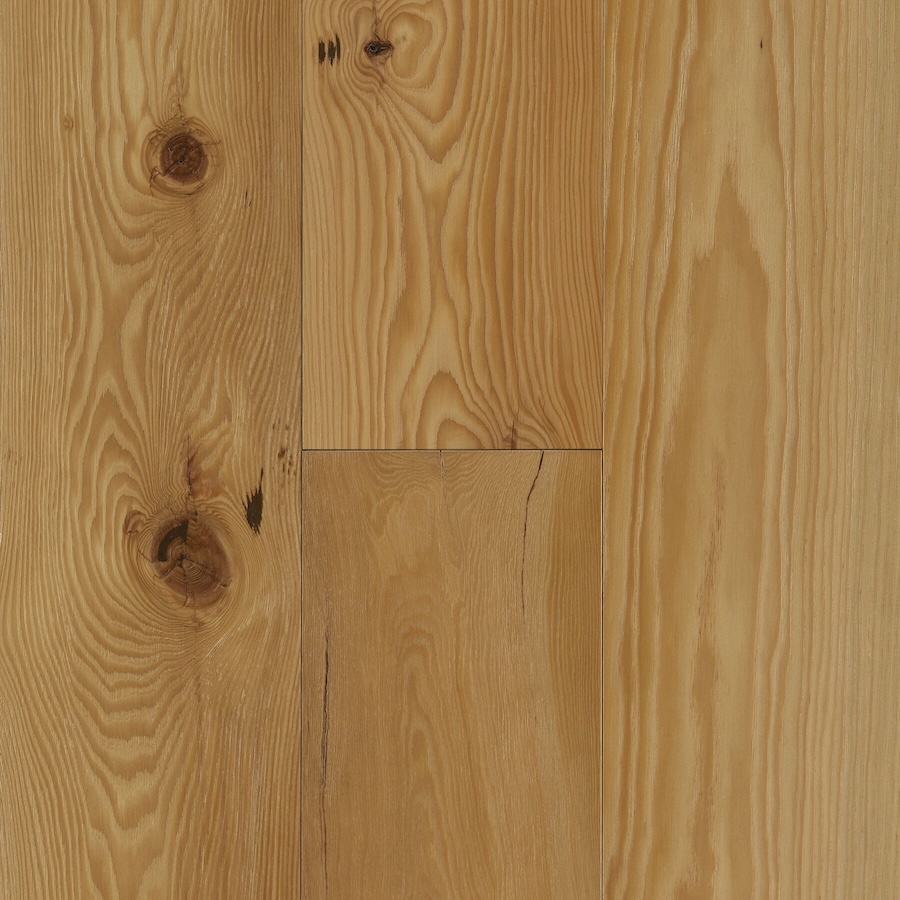
Pine has a lighter, warmer appearance than many of the hardwood species commonly used for flooring. The wood can range from creamy white and pale yellow to warmer golden, amber, and reddish tones, depending on the species and whether it comes from sapwood or heartwood.
The grain is generally prominent and can vary considerably among pine species and even from board to board. Knots, growth rings, and other natural markings are often an important part of pine’s visual character.
Pine is botanically classified as a softwood, a distinction based on the type of tree rather than a measure of hardness. Even within the pine family, physical properties vary significantly from species to species. USDA data, for example, show substantial differences among eastern white pine, ponderosa pine, and the southern pines.
How to Identify a Pine Tree
With so many pine species, the details vary, but several characteristics can help distinguish pines from other trees.
Pine Needles
Pines have needle-like leaves that grow in bundles, or fascicles, rather than individually along the branch. Depending on the species, a bundle typically contains two, three, or five needles. Needle length, stiffness, and color can also help identify individual species.
.jpg) Sollip pine needles, 국립국어원, CC BY-SA 2.0 KR, via Wikimedia Commons
Sollip pine needles, 국립국어원, CC BY-SA 2.0 KR, via Wikimedia Commons
Pine Cones
Pines reproduce through cones rather than flowers and fruit like the hardwood species we’ve covered so far. Cone size, shape, scales, and even the presence of spines vary widely among species and can provide important identification clues.
 Ponderosa pine cones, Forest Service Northern Region from Missoula, MT, USA, Public domain, via Wikimedia Commons
Pine Bark
Pine bark varies considerably by species and age. It can be relatively smooth on younger trees and become thick, flaky, plated, or deeply furrowed as the tree matures.
_tree.jpg) SusquehannaMan, CC0, via Wikimedia Commons
SusquehannaMan, CC0, via Wikimedia Commons
Form
Many pines develop a straight central trunk with branches arranged around it, though the crown's eventual shape and size depend heavily on the species and growing environment.
 Pudelek (Marcin Szala), CC BY-SA 3.0, via Wikimedia Commons,
Pine Through the Years
Pine has been part of American building history for centuries, used for everything from structural framing and interior paneling to doors, cabinetry, furniture, and flooring. Its relatively straight grain and workability have also made it a popular choice for millwork and other architectural details.

Pine and walnut paneling in the 18th-century parlor of Marmion, the Fitzhugh family house in Tidewater, Virginia; Metropolitan Museum of Art, CC0, via Wikimedia Commons
Pine has a long history underfoot, particularly in older American homes where wide plank floors were common. Historic pine floors can still be found in surviving homes and commercial buildings, often bearing the dents, wear, and other marks that accumulate over generations. For some, that developing patina is part of pine’s appeal; for applications where greater resistance to everyday wear is important, however, pine has historically presented a different performance equation than harder flooring woods.
From the Forest to the Floor
Pine has never needed to imitate oak, hickory, or any other species to earn its place in interiors. Its warm color, visible grain, knots, and natural variation give pine floors an unmistakable character of their own.
A New Take on Pine
The pine flooring story takes a twist once densification enters the picture. Densified wood technology uses heat and pressure to increase the density of real wood, improving its hardness, abrasion resistance, and overall surface performance. Pine typically ranks around 500 on the Janka hardness scale, but once densified, it can exceed 2,500—hard enough for even commercial flooring applications, such as hotel lobbies, retail spaces, restaurants, and other high-traffic interiors. Learn more about densified wood flooring.
From Species to Surface
Fortessa™ densified hardwood flooring is available through Crossville Studios and includes pine as one of its species. Fortessa delivers increased dent and scratch resistance while retaining the grain, warmth, and natural character of real wood.
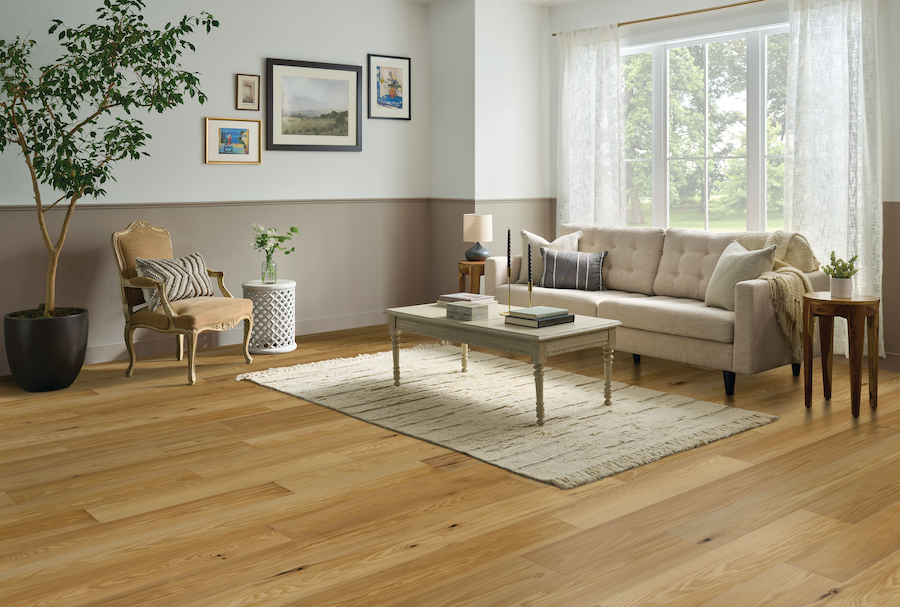
Fortessa densified pine flooring
Our Hardwood Species Spotlight series continues with another look at the trees, grain, color, and characteristics behind the floors we live with every day.
Bring the Right Wood Flooring Home
The wood flooring pros at Crossville Studios locations can help you turn what you’ve learned about species into the right flooring choice for your project. From solid and engineered hardwood to species, color, finish, performance, installation, and long-term care, they can help you sort through the details and find the floor that fits. Connect with us today!