

Tile Tech Rectified vs.Calibrated Porcelain Tile: What’s the Difference?
Jul 15, 2026Tile comes with its own vocabulary, and some of it can sound more complicated than it needs to. Case in point: rectified and calibrated porcelain and ceramic tile. You’ll often see these terms in product descriptions, spec sheets, and packaging details. Both relate to tile sizing, and both matter because consistent sizing helps create cleaner, better-looking installations. But rectified and calibrated tile are not the same thing. Knowing the difference can help designers, architects, specifiers, contractors, and project teams make smarter decisions before a single box is opened. Let’s break it down.
What Is Calibrated Porcelain Tile?
Calibrated tiles (often identified as non-rectified on spec sheets) are sorted by size after manufacturing. During production, porcelain tiles start out nearly identical in size when they come out of the press. Once they go through the kiln, though, heat causes the tiles to shrink. That shrinkage can vary slightly from tile to tile, even within the same collection.
Calibration is the process manufacturers use to group finished tiles by size. Tiles are sorted into calibers, which are specific size ranges that meet industry standards for dimensional consistency.
In everyday terms, calibrated porcelain tile gives installers boxes of tile that are very close in size, even though the edges have not been mechanically cut after firing.
Non-rectified porcelain tile can be a great choice for many residential and commercial projects, especially when the design does not call for ultra-tight grout joints.
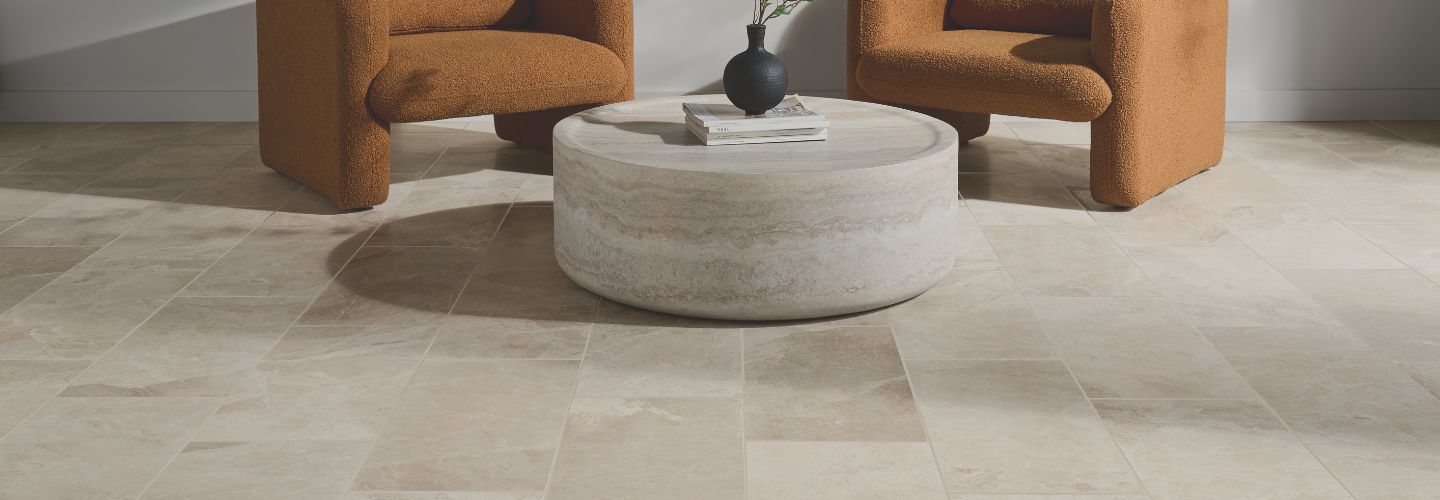
Travertine-look Access Point™ (non-rectified) porcelain tile
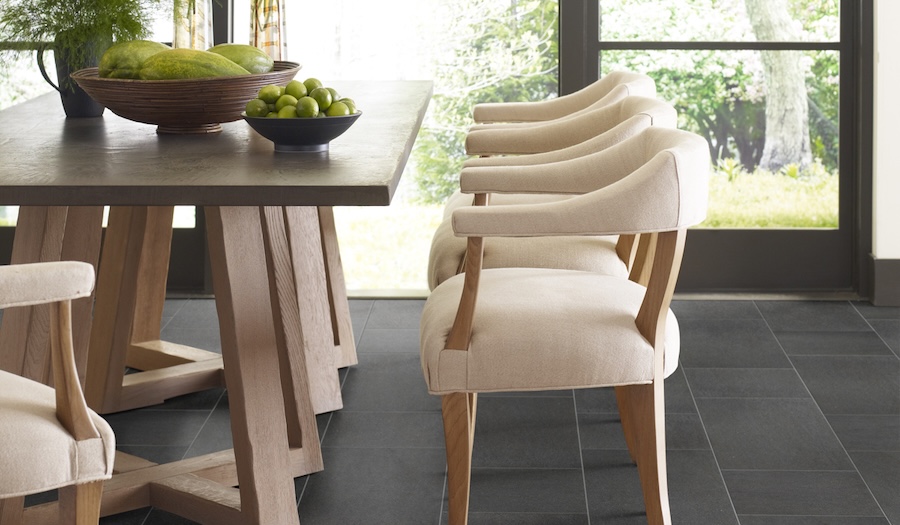
Basalt non-rectified porcelain tile.
Why Caliber Matters in Multi-Color Tile Patterns
Caliber becomes especially important when a design uses more than one color of calibrated tile. Think checkerboard floors, color-blocked patterns, borders, or geometric layouts. Each tile color is produced separately, which means one color may end up in one calibrated size range while another color may fall into a slightly different caliber.
Slight dimensional differences may not seem dramatic, but in a complete floor or wall installation, those differences can stand out. Tile edges may not align as cleanly, grout joints may vary more than expected, and a pattern that looked beautifully crisp on paper may become harder to execute in the field.
For mixed-color installations using calibrated tile, all colors should be supplied in the same caliber whenever possible. A little planning up front can save a lot of “why is this not lining up?” later.
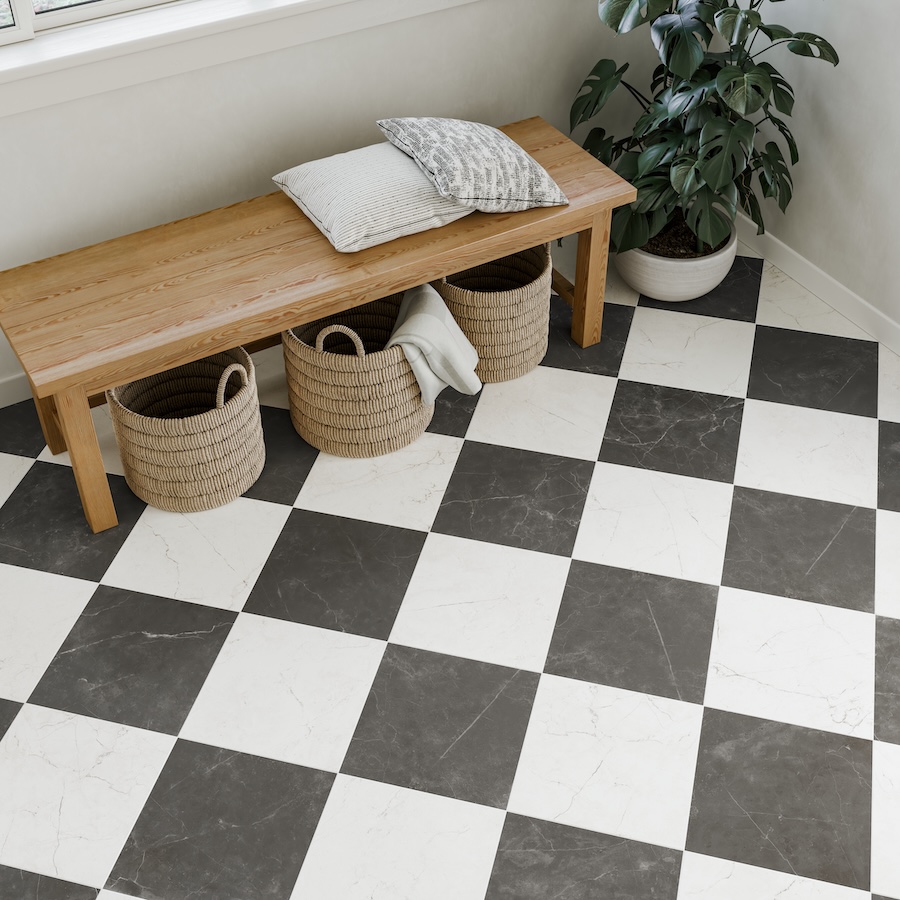
Keystone non-rectified porcelain tile in black and white checkerboard pattern.
What Is Rectified Porcelain Tile?
Rectified porcelain tile takes sizing one step further. After firing, rectified tiles are mechanically ground or cut to a precise size. This finishing process creates very consistent dimensions and straighter, more exact edges from piece to piece.
That precision gives rectified tile a clean, tailored appearance. It can also make certain patterns easier to install because the tiles are more uniform. For designs where tighter grout joints are part of the look, rectified porcelain tile is often the better choice.
Crossville Studios recommends following manufacturer guidelines for grout joint width and installation requirements. In many cases, rectified porcelain tile allows for smaller grout joints than non-rectified tile, helping create a more seamless visual across the surface.
When Rectified Tile Makes a Big Design Difference
Rectified porcelain tile is especially helpful when the goal is a crisp, refined installation. Large-format tile benefits from precise edges because the surface reads cleaner and more continuous. Modern interiors with minimal grout contrast can also benefit from rectified tile because the finished look feels more streamlined.
Crossville Studios offers rectified porcelain tile options, including Argent 2.0 and Luxury for installations where edge precision and a more tailored finish are important.
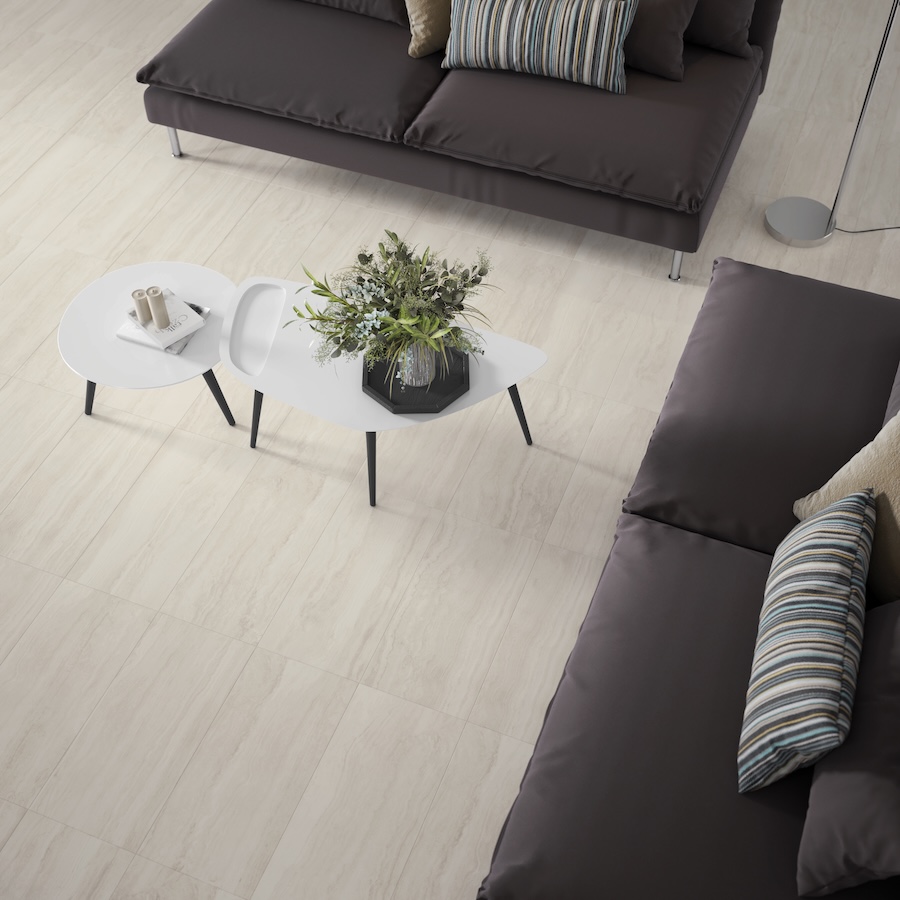
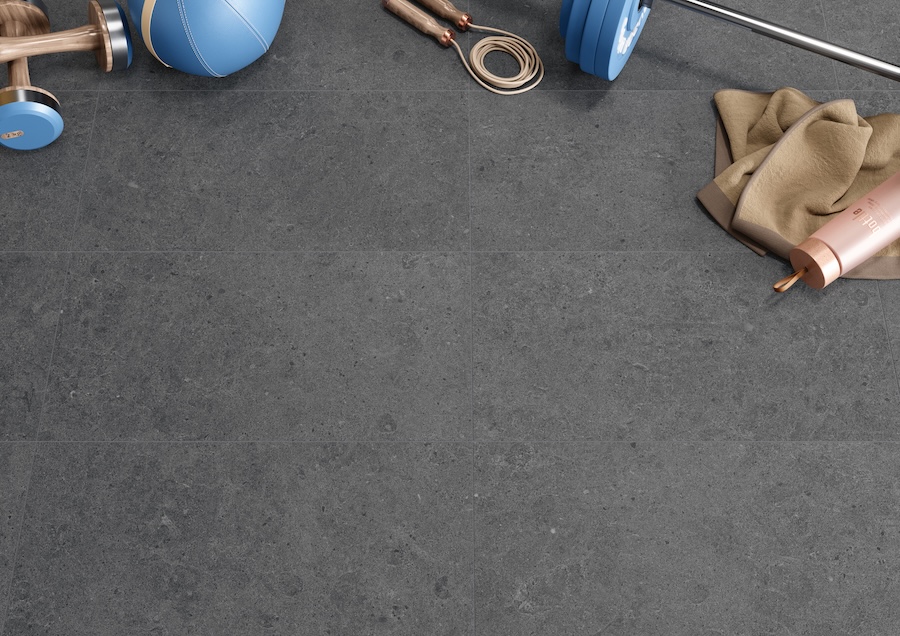 Argent 2.0 rectified porcelain tile
.jpg?lang=en-US)
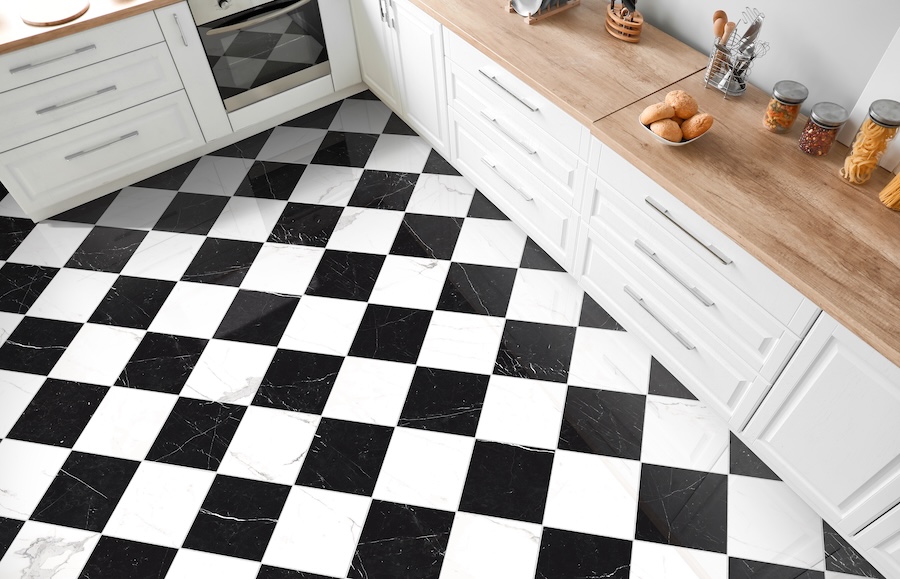
Luxury rectified porcelain tile in black and white checkerboard layout.
Wood-look porcelain tile is another place where rectified edges really shine. A tighter grout joint helps porcelain planks look more like natural hardwood flooring, which is usually the whole point.
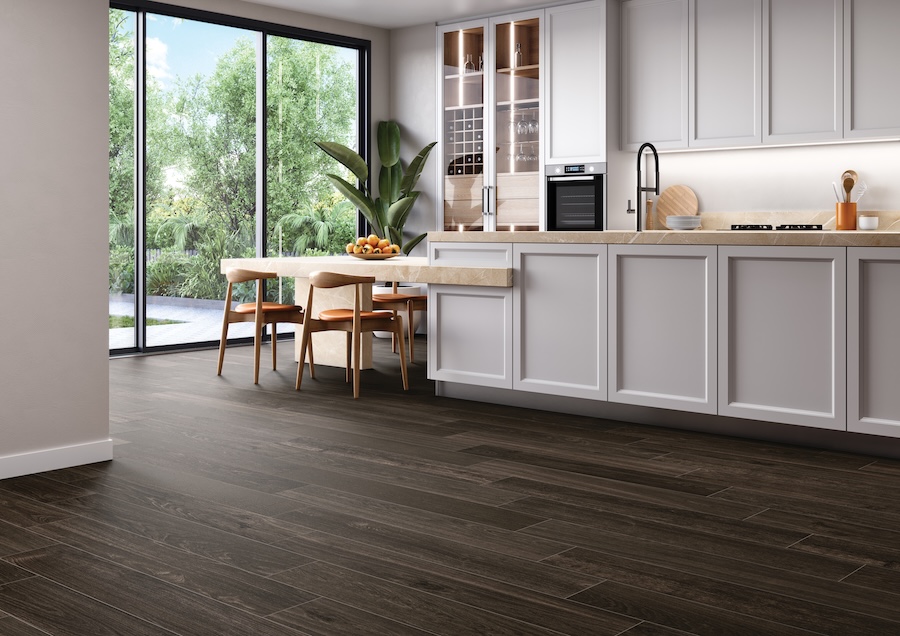
Rural Retreat™ rectified porcelain wood-look tile.
Rectified vs.Calibrated Tile: Which One Do You Need?
The best choice depends on the design intent, installation method, pattern, and desired grout joint. Calibrated tile offers reliable size consistency through sorting. It works beautifully in many applications and can be well suited for projects where a standard grout joint supports the overall design.
Rectified tile has higher edge precision because each tile is finished to size after firing. It is often preferred for modern designs, tighter grout joints, large-format installations, wood-look planks, and layouts where exact alignment matters.
Neither option is better across the board. Rectified and calibrated porcelain tile simply serve different design and installation goals. The key is knowing which one supports the look you want and meets the installation requirements of your project.
Why the Difference Matters
A beautiful tile installation starts long before the first tile is set. Understanding whether porcelain tile is rectified or calibrated helps everyone involved make better decisions, from specification to installation. Designers can plan patterns more confidently. Installers can prepare for the right grout joint. Homeowners can better understand what to expect from the finished space.
Tile may be a design decision, but installation details are what help the design live up to its potential. Size consistency, edge finish, and grout joint expectations all play a role in how polished the final result feels.
Crossville Studios provides product details and technical information to help you choose tile with confidence. When those details are clear from the beginning, the finished space has a much better chance of looking exactly the way it was imagined.
Talk Through the Details with Crossville Studios
Rectified or calibrated, every tile decision works best when the design intent and installation details are aligned. Connect with a Crossville Studios tile pro at one of our 24 locations to explore porcelain tile options, review product details, and find the right fit for your project.