

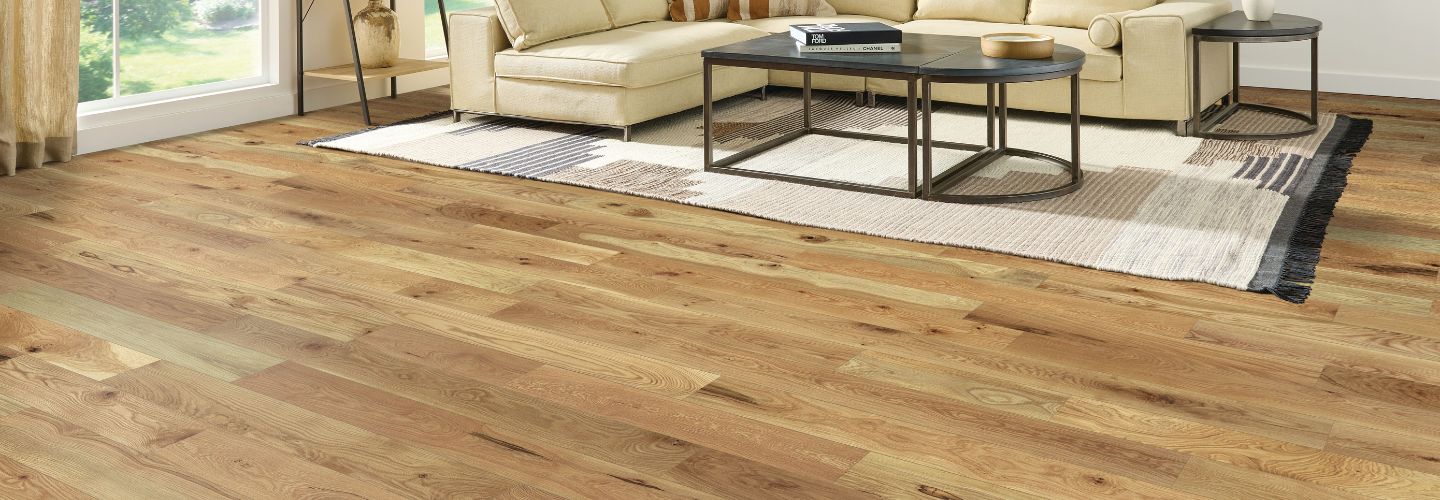
Product & Trends Hardwood Species Spotlight: Hickory
Aug 15, 2026Hardwood flooring starts with the tree, and every species brings its own combination of color, grain, character, hardness, and performance. In our new Hardwood Species Guide, we’re taking a closer look at some of the woods behind the floors at Crossville Studios™—what makes each one distinctive, how to recognize it, and what it brings to a finished hardwood floor.
We’re starting with one of the toughest characters in the forest: hickory.
Meet Hickory
.jpg) Brendansoloughlin, CC BY 4.0, via Wikimedia Commons
Brendansoloughlin, CC BY 4.0, via Wikimedia Commons
Hickory trees are large hardwood canopy trees, and they can get seriously impressive. Some reach heights of up to 160 feet, with massive trunk diameters of 6 to 7 feet. They’re also remarkably long-lived, surviving for as many as 350 years.
Of the 23 species of hickory, 16 are found in North America. Although individual species have their differences, the hardwood lumber industry generally doesn’t distinguish between them. All hickory species are deciduous, losing their leaves in the fall.
One Tough Hardwood
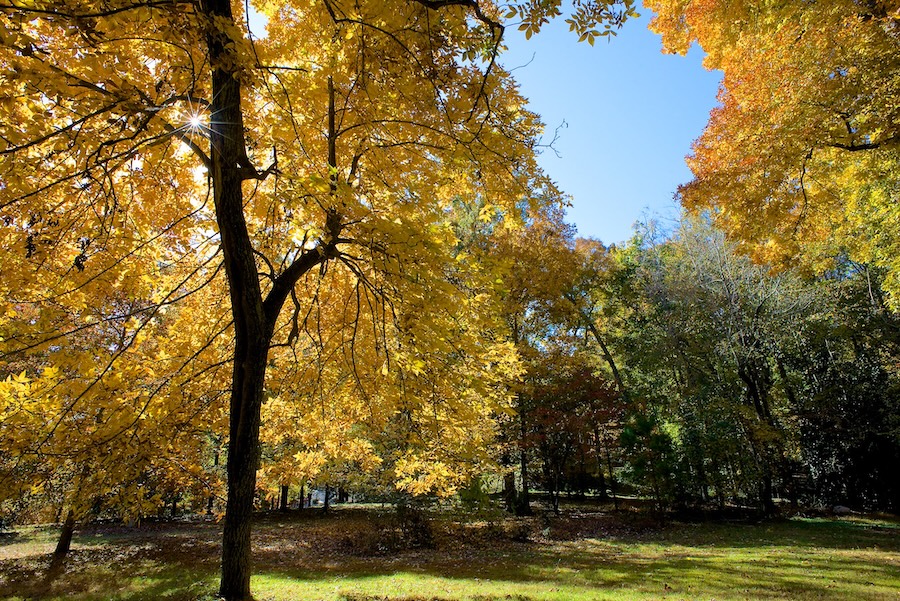 "Autumn Gold” by Eric Vaughn, CC BY 2.0
Hickory is very hard, dense, stiff, and shock-resistant. There are woods that are stronger and others that are harder, but the particular combination of strength, hardness, and stiffness found in hickory is not found in any other commercial wood.
That combination has made hickory useful for some fairly demanding jobs over the years.
Hickory has been used for tool handles, carts, furniture, ski bottoms, and decorative architectural elements. For many years, it was also the wood of choice for golf club shafts and lacrosse sticks until steel and graphite became more common.
The connection hasn’t disappeared completely. “Hickory golf,” played with traditional hickory-shafted clubs, remains popular, and lacrosse sticks are still sometimes referred to as “hickory sticks.”
And then there’s barbecue. Hickory is one of the preferred woods for smoking cured meats and cooking barbecue.
Its strength and other natural characteristics also make hickory a good choice for cabinetry and hardwood flooring.
What Does Hickory Wood Look Like?
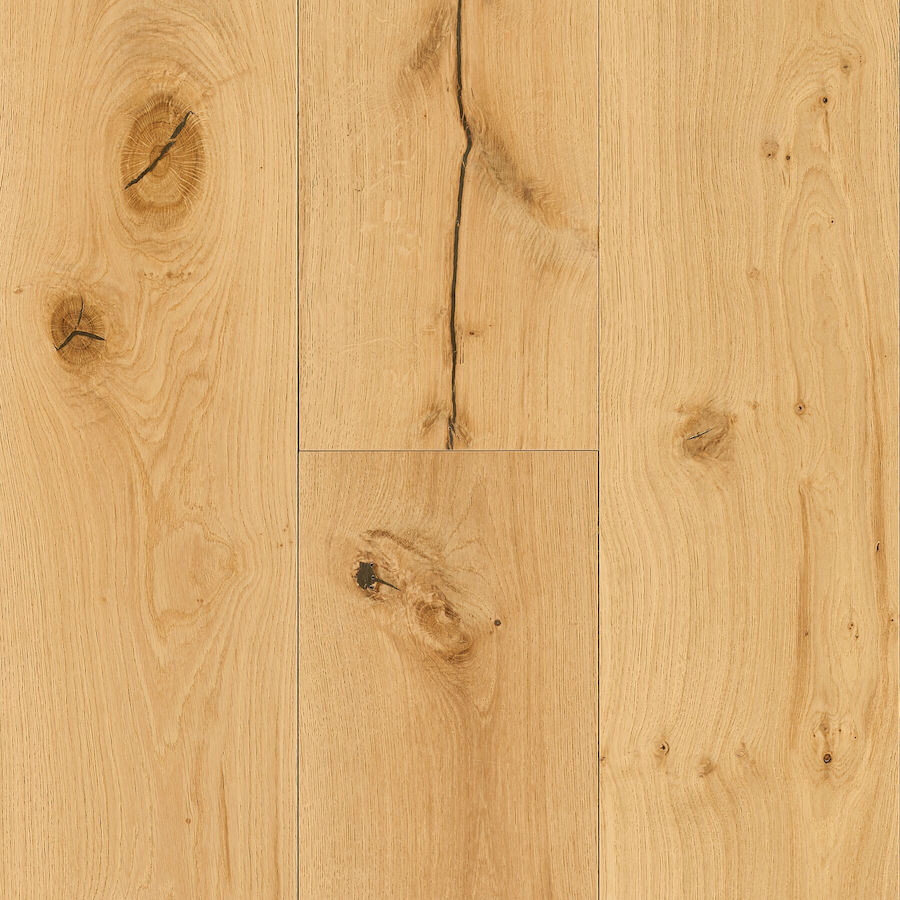 Glenmora Natural Hickory engineered hardwood flooring
Hickory has plenty of personality before a stain or finish ever enters the picture. The sapwood is white with a brownish cast, while the heartwood ranges from pale to reddish brown. Hickory also has a coarse texture and is known for bold, flowing grain patterns and wide variations in color.
Those variations are part of what makes each hickory project unique. The wood may also contain random specks, burls, knots, and mineral streaks that add even more individual character. The result is a hardwood with plenty of natural movement from board to board.
How to Identify a Hickory Tree
Hickory is distinctive underfoot, but it has plenty of identifying features while it’s still standing in the forest.
Alternate branching: Hickory trees have alternate branching, meaning the side branches are staggered and alternate along the branch rather than growing directly opposite one another.
Compound leaves: Hickory trees have alternate, compound leaves, with several leaflets associated with each bud at the base of the stem. Each stalk, or rachis, carries between five and 17 serrated-edge leaflets. The leaflets spread out from the stalk, with those toward the end visibly larger.

EgorovaSvetlana, CC BY-SA 4.0, via Wikimedia Commons
Patterned bark: Hickory bark forms ridges in a vertical pattern. Depending on the species, the ridges may be shallow or deep, close together or farther apart, but they remain vertical. On some species, the edges of the bark plates begin to lift as the tree matures and may eventually flake away.
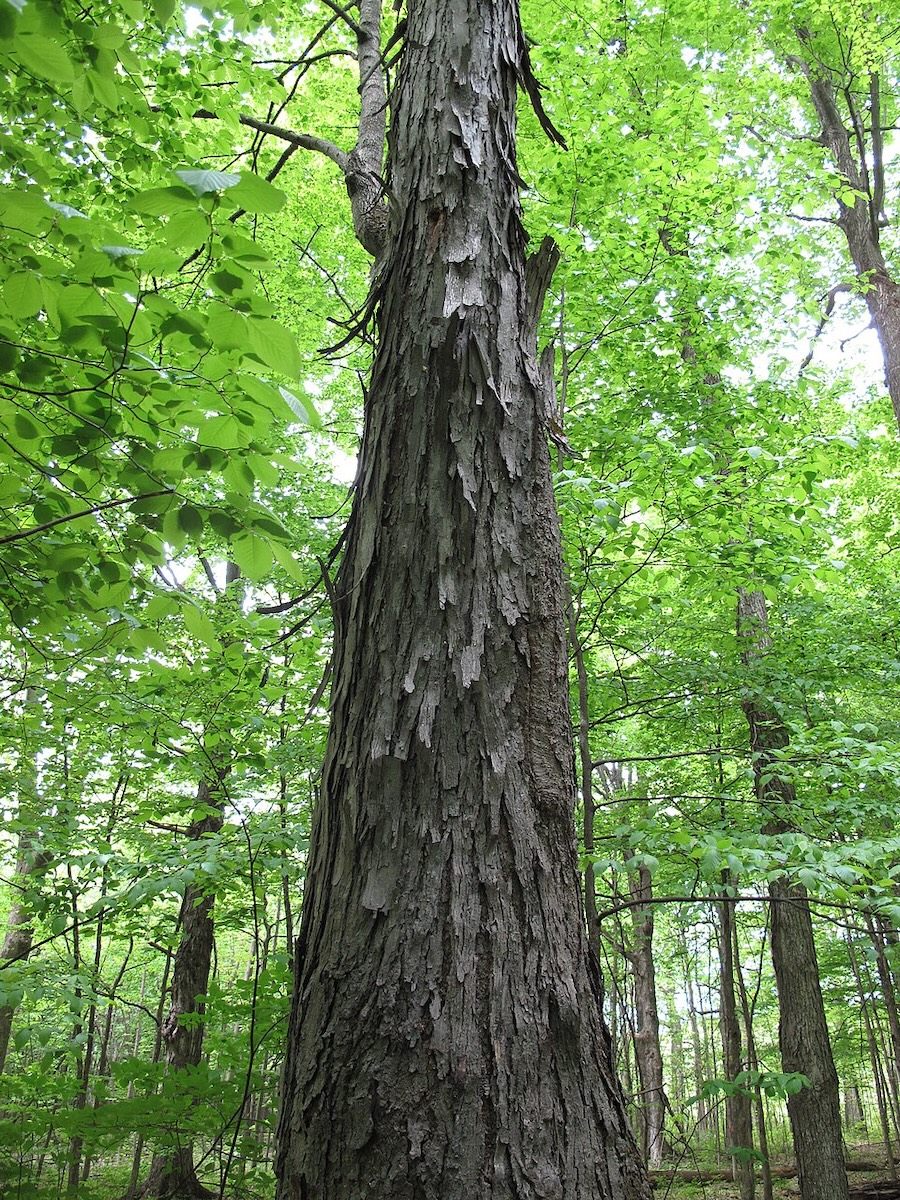
Laval University, CC BY-SA 4.0, via Wikimedia Commons
Flowers: Hickory trees produce small yellow-green catkins in the spring. Catkins are slim, cylindrical flower clusters with inconspicuous or no petals.
 William (Ned) Friedman, CC BY-SA 4.0, via Wikimedia Commons
Fruit: The fruit of a hickory tree is a nut. Some species produce edible nuts, while others have a bitter taste and are used mainly as animal feed. The nut develops inside a woody, four-valved outer husk. It starts out green, then hardens from dark to light brown as it matures, with a seam running around the middle. At maturity, the husk splits open.
Inside is a white or tan nut, roughly the size of a gum ball, enclosed in a shell that may be thick or thin.
 Agnieszka Kwiecień, Nova, CC BY-SA 4.0, via Wikimedia Commons
From the Forest to the Floor
Hickory brings together a pretty remarkable list of characteristics: strength, hardness, bold grain, wide natural color variation, and distinctive markings. Those qualities have made it useful for everything from tool handles and golf clubs to barbecue—and they also help explain why hickory has such a recognizable place in hardwood flooring.
From Species to Surface
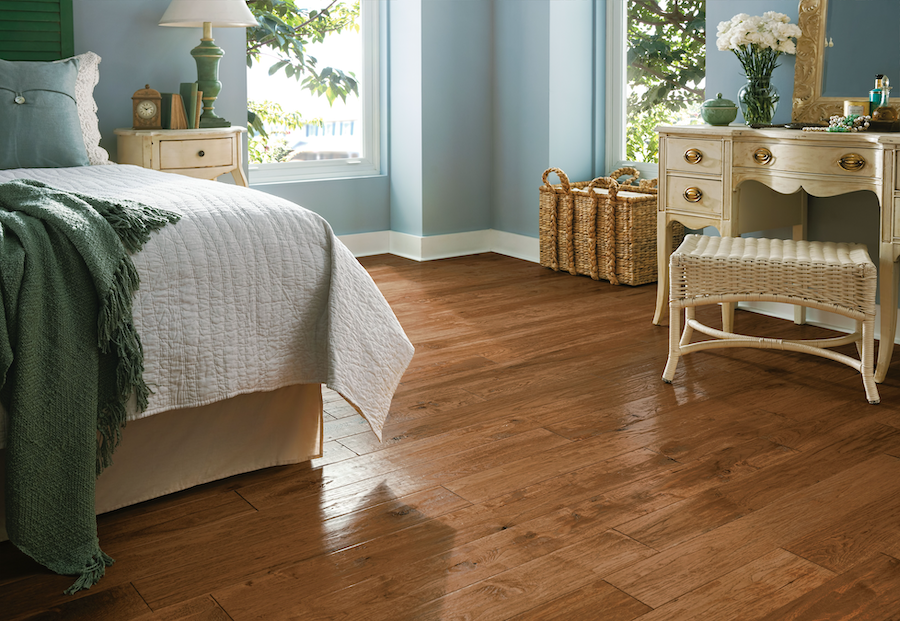
Hickory’s bold grain, wide natural color variation, and distinctive markings give it a strong identity in hardwood flooring. Across Crossville Studios hardwood collections, different colors, finishes, textures, and constructions show just how much range the species can have.
.png?lang=en-US)
Sawbrier™ solid hardwood flooring in Hickory Russet
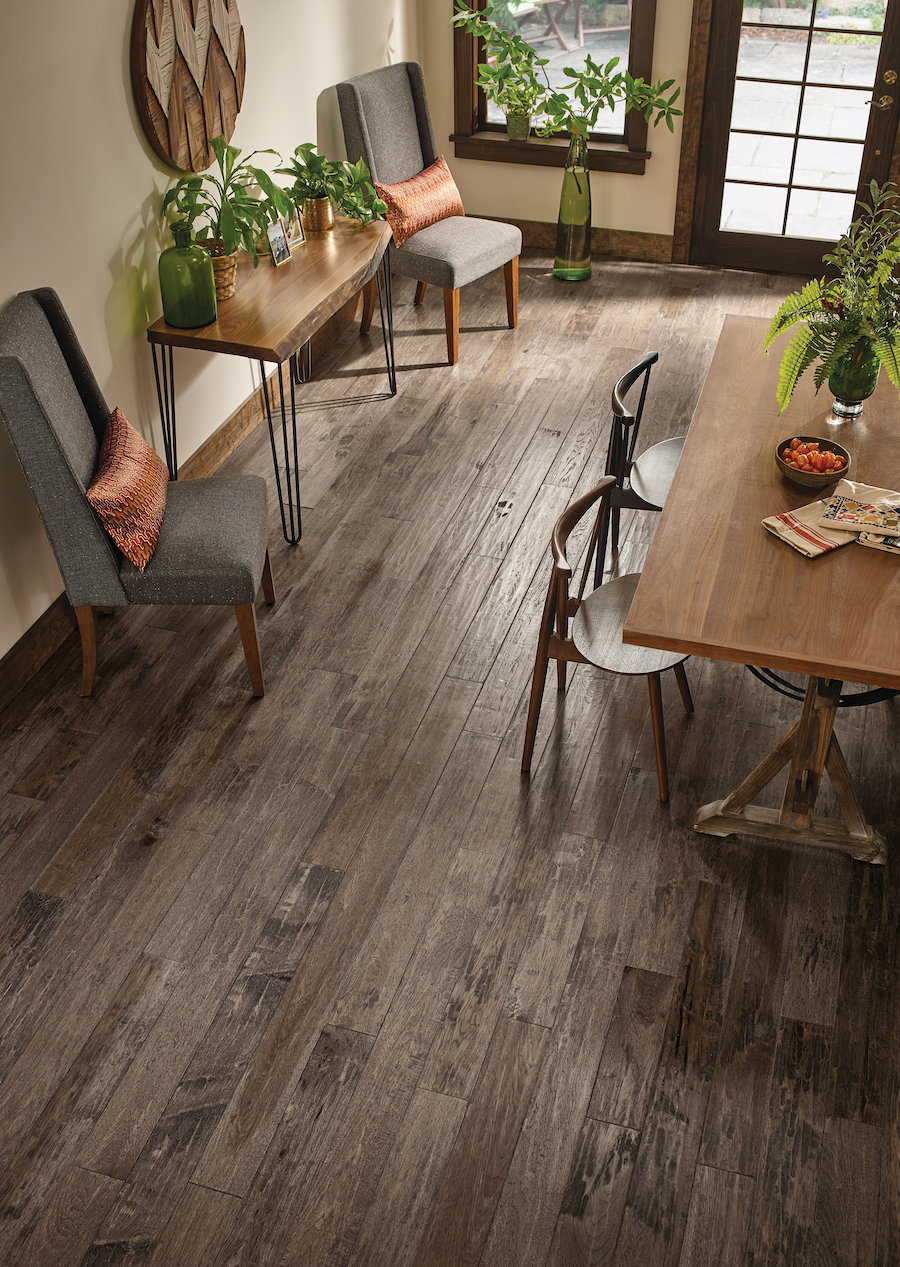 Sawbrier™ solid hardwood flooring in Hickory Coffee
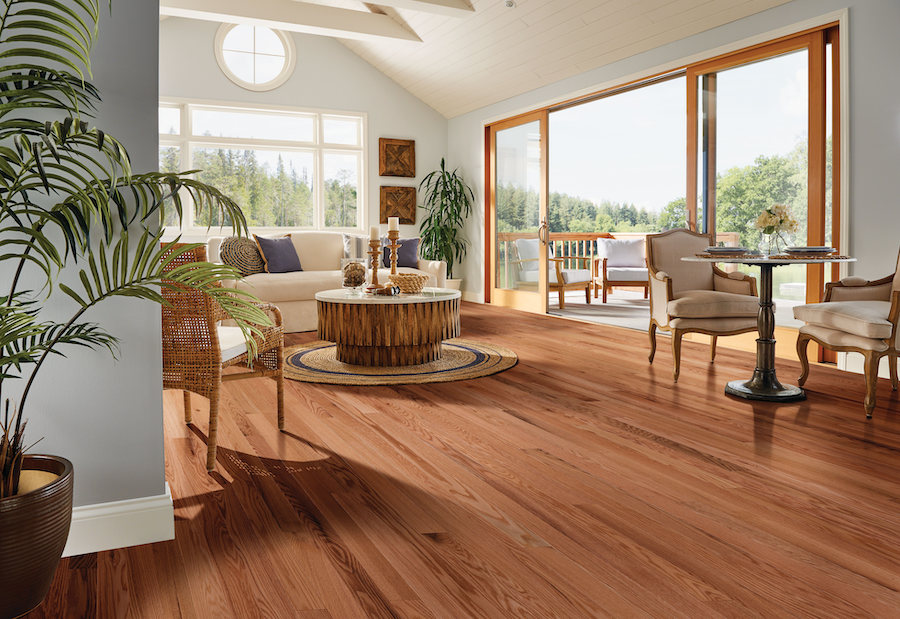 Grandin Grove™ solid hardwood planks in Hickory Rustic Natural
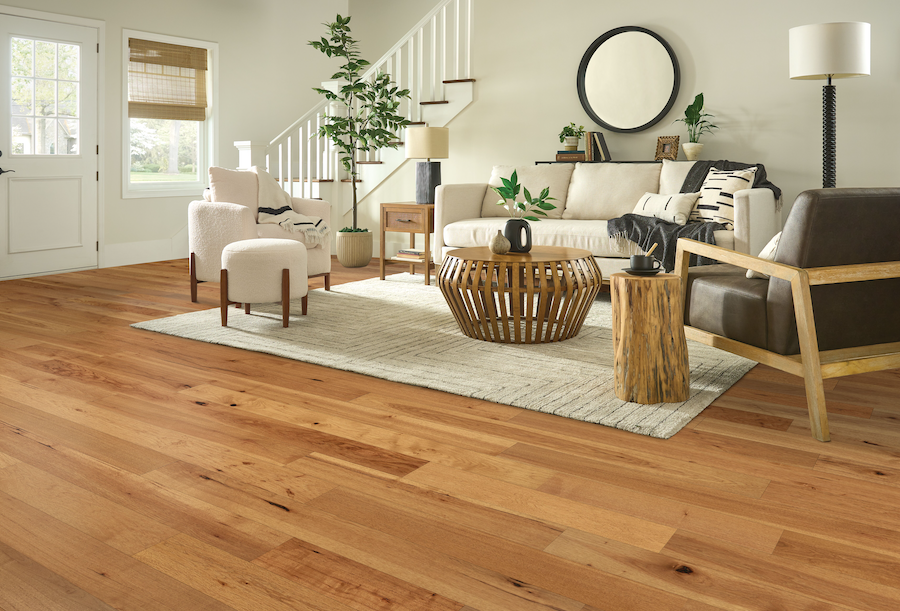
Glenmora™ Natural Hickory engineered hardwood flooring in Hickory Single Malt.
Next in our Hardwood Species Spotlight series, we’ll head back into the forest to explore another species and what makes it unique.
Bring the Right Hardwood Home
The wood flooring pros at Crossville Studios locations can help you turn what you’ve learned about species into the right flooring choice for your project. From solid and engineered hardwood to species, color, finish, performance, installation, and long-term care, they can help you sort through the details and find the floor that fits. Connect with us today!